Biography

Race, Racism, and Biography

Six BIO members shared their views on race and biography for the July issue of The Biographer’s Craft:

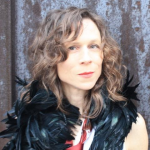
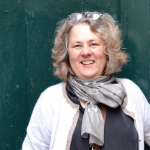
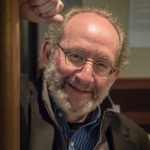
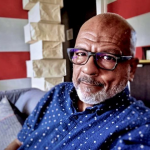
Black Lives/Young Readers by Ray Anthony Shepard

Archival Interventions: Reconstructing Life on the Margins of History by Pamela Newkirk

Biography Matters by Patricia Bell-Scott

Before There Was Karen, There Was Miss Anne by Carla Kaplan

The Sword and the Shield by Peniel E. Joseph

Biography Has Mattered to Black Lives by Eric K. Washington


Black Lives Matter to BIO

During this historic summer of 2020, Black Lives Matter is garnering support nationally and internationally. For biographers and readers of biography, black lives matter, and writing black lives matters. Six BIO members will contribute essays to the July issue of The Biographer’s Craft about black lives, racism, and how they relate to biography. Here, in the meantime, are biographies of African-Americans by BIO members.

Alexandrov, Vladimir. The Black Russian, 2013.

Bell-Scott, Patricia. The Firebrand and the First Lady: Portrait of a Friendship, Pauli Murray, Eleanor Roosevelt and the Struggle for Social Justice, 2016.

Branch, Taylor. America in the King Years, 3 Volumes, 1988, 1998, 2006.

Bundles, A’Lelia. On Her Own Ground: The Life and Times of Madam C. J. Walker, 2001.

Burgan, Michael: Olympic Gold 1936: How the Image of Jesse Owens Crushed Hitler’s Evil Myth, 2017.

Clinton, Catherine. Harriet Tubman: The Road to Freedom, 2004.

Cooper, Michael L. From Slave to Civil War Hero: The Life and Times of Robert Smalls, 1994

Forret, Jeff. Williams’ Gang: A Notorious Slave Trader and His Cargo of Black Convicts, 2020

Gerzina, Gretchen Holbrook. Mr. And Mrs. Prince: How an Extraordinary Eighteenth-Century Family Moved Out of Slavery and into Legend, 2008.

Gould, Jonathan. Otis Redding: An Unfinished Life, 2017.

Henig, Adam. Alex Haley’s Roots: An Author’s Odyssey, 2014; Baseball Under Siege: The Yankees, the Cardinals, and a Doctor’s Battle to Integrate Spring Training, 2017.

Joseph, Peniel. Stokely: A Life, 2014; The Sword and the Shield: The Revolutionary Lives of Malcolm X and Martin Luther King, Jr., 2020.

Kaplan, Carla. Zora Neale Hurston: A Life in Letters, 2002.

Kelley, Kitty. Oprah: A Biography, 2010.

Kiesel, Diane. She Can Bring Us Home: Dr. Dorothy Boulding Ferebee, Civil Rights Pioneer, 2015.

Kranish, Michael. The World’s Fastest Man: The Extraordinary Life of Cyclist Major Taylor; America’s First Black Sports Hero, 2019.

Meyer, Eugene. Five for Freedom: The African-American Soldiers in John Brown’s Army, 2018.

Mikorenda, Jerry. America’s First Freedom Rider: Elizabeth Jennings, Chester A. Arthur, and the Early Fight for Civil Rights, 2020.

Morris, James McGrath. Eye on the Struggle: Ethel Payne, the First Lady of the Black Press, 2017.

Newkirk, Pamela. Spectacle: The Astonishing Life of Ota Benga, 2015.

Parker, Alison M. Unceasing Militant:The Life of Mary Church Terrell, due in December 2020.

Rampersad, Arnold. The Art and Imagination of W. E. B. Du Bois, 1976; The Life of Langston Hughes, 2 Volumes, 1986, 2002; Jackie Robinson: A Biography, 1997; Ralph Ellison: A Biography, 2007.

Shepard, Ray. Now or Never!: Fifty-Fourth Massachusetts Infantry’s War to End Slavery, 2017.

Snyder, Brad. A Well-Paid Slave: Curt Flood’s Fight for Free Agency in Professional Sports, 2007

Teachout, Terry. Duke: A Life of Duke Ellington, 2013.

Tooma, Billy. The Black Eagle of Harlem (documentary film), 2017.

Washington, Eric K. Boss of the Grips: The Life of James H. Williams and the Red Caps of Grand Central Terminal, 2019.

Williams, Sonja. Word Warrior: Richard Durham, Radio and Freedom, 2015.

Woelfle, Gretchen. Mumbet’s Declaration of Independence, 2014; Answering the Cry for Freedom: Stories of African Americans and the American Revolution, 2016.

If you know of a biography by a BIO member that should be added to this list, please email Michael Burgan.

BIO Welcomes New Board Members and a New Vice President

By Linda Leavell

BIO members recently elected a new vice president, Sarah Kilborne, and three new board members: Natalie Dykstra, Steve Paul, and Eric K. Washington. Like BIO’s membership at large, members of BIO’s Board of Directors come from diverse backgrounds and practice the art of biography in multiple print and non-print media.

Sarah Kilborne

Sarah Kilborne has chaired BIO’s Publicity and Social Media Committee for the past two years. Thanks to her initiative and enthusiasm for BIO and the support of her committee members, BIO is upgrading its website and increasing BIO’s presence in the media and publishing world. Kilborne is a performance artist and LGBTQ activist, as well as a writer for children and adults. Her American Phoenix: The Remarkable Story of William Skinner, A Man Who Turned Disaster into Destiny was published by Free Press in 2012. Her current project is a group biography of the women musicians featured in her one-woman show, The Lavender Blues: A Showcase of Queer Music before World War II.

Natalie Dykstra

Natalie Dykstra is a longtime member and supporter of BIO. She received BIO’s first Ina and Robert Caro Travel Fellowship and has presented several times at BIO conferences. Her first biography, Clover Adams: A Gilded and Heartbreaking Life, was a finalist for the 2013 Massachusetts Book Award. Her current project, a biography of the art collector and museum founder Isabella Stewart Gardner, won support from the 2019 NEH Public Scholar program and is under contract with Houghton Mifflin Harcourt. Dykstra teaches in the English Department at Hope College in Michigan during the fall semester and the rest of the year works from her home near Boston.

Steve Paul

Steve Paul is a journalist-turned-biographer. Since his retirement as a reporter, editor, and book critic for the Kansas City Star, he has written and published Hemingway at Eighteen with Chicago Review Press, an independent publisher that he connected with during his first BIO Conference. He has just completed the first draft of a biography and literary portrait of the American writer and Kansas City-native Evan S. Connell, under contract with University of Missouri Press. Paul is a former board member of the National Book Critics Circle and for the past year served on BIO’s Caro Fellowship Committee.

Eric K. Washington

Eric K. Washington is an independent historian of New York neighborhoods and the author of Boss of the Grips: The Life of James H. Williams and the Red Caps of Grand Central Terminal, just out in December from Liveright/Norton. The project earned him a 2015–2016 Leon Levy Biography Fellowship, a Dora Maar House Residency Fellowship in France, and participation in Columbia University’s Community Scholar program for three years. His profile of AIDs activist Phill Wilson for Out magazine received recognition from the National Association of Black Journalists. Washington is the owner of Tagging the Past, which endeavors to reconnect forgotten history to present landscapes through articles, talks, and tours.

Kilborne, Washington, Paul, and Dykstra will help BIO grow both in numbers and in influence over the coming years.

Linda Leavell is a charter member and current president of BIO. Her biography of the American poet Marianne Moore won the 2014 Plutarch Award and PEN Award.

BIO Workshop: Making Full Use of Fair Use

You can see a video of this workshop here.

This meeting is free and open to all who register. 

Fair use—the right of biographers and other writers, under limited conditions, to quote, paraphrase, summarize, and reproduce the copyrighted words and images of our subjects and others, without paying fees—is embedded in the U.S. Copyright Act of 1976. Our distinguished panel of experts cuts through the almost universal confusion about fair use to illuminate this necessary and vital tool of our core work.

Panel: Brandon Butler is the director of information policy at the University of Virginia Libraries and was the co-principle investigator on the widely respected Code of Best Practices in Fair Use for Academic and Research Libraries.

John A. Glusman is the vice president and editor-in-chief of W. W. Norton & Company.

Peter Jaszi is a Professor Emeritus at American University’s Washington College of Law, where he helped to found the Glushko-Samuelson Intellectual Property Clinic. He has served as a trustee of the Copyright Society of the USA and as a member of the Librarian of Congress’s Committee on Copyright Registration and Deposit. He is the co-author of the groundbreaking book, Reclaiming Copyright.

Participants are encouraged to read BIO’s statement on fair use and to email their questions ahead of time to Anne Heller.

REGISTER NOW

Sonia Purnell Wins 2020 Plutarch Award

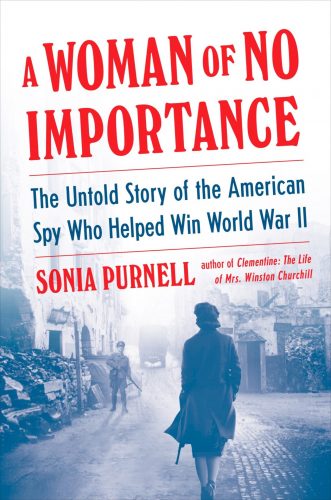
Sonia Purnell’s A Woman of No Importance: The Untold Story of the American Spy Who Helped Win World War II (Viking/Penguin) has won the 2020 Plutarch Award for the Best Biography of 2019.

The Plutarch is the world’s only literary award given to biographers by biographers. Named after the famous Greek writer, BIO awards the honor to the best biography of the year, chosen by a committee of five distinguished biographers. The award comes with a $1,000 honorarium.

Caroline Fraser, Plutarch Award Committee Chair, stated, “The life of an obscure figure, Virginia Hall, rose to the top of the Plutarch list this year in Sonia Purnell’s remarkable feat of research and storytelling. Combing Resistance files in Lyon and archives in London, Paris, and Washington, DC, Purnell retraced Hall’s well-concealed life, revealing the extreme perils and betrayals she faced, including the misogyny of handlers who nearly got her killed. Vulnerable, reckless, and ruthless, Hall emerges as a character of great complexity: an American woman who survived behind enemy lines in Nazi-occupied France with a wooden leg and a questionable French accent, setting up spy networks for Churchill’s government and refusing to evacuate as the Gestapo closed in. With the propulsive power of an espionage thriller, A Woman of No Importance sheds new light on the role of women in warfare.”

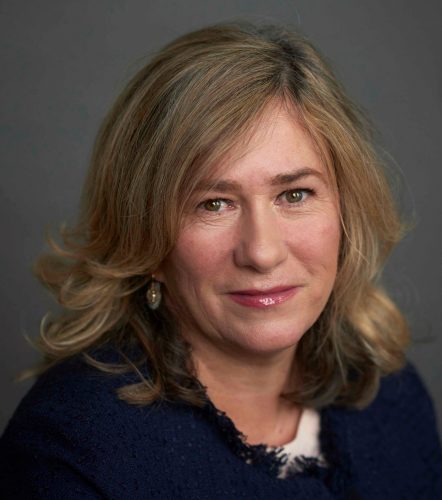
Photo by Charlie Hopkinson

Sonia Purnell is a biographer and journalist who has worked at The Economist, The Telegraph, and The Sunday Times. Her previous book, Clementine: The Life of Mrs. Winston Churchill, was chosen as Book of the Year by The Telegraph and The Independent and was a finalist for the 2019 Plutarch. NPR chose A Woman of No Importance as their Best Book of the Year, and film rights have been sold to Paramount.

Purnell responded to news of her win, saying: “Virginia Hall was a hero in the true sense of the word, and I am thrilled beyond words to receive the Plutarch Award as a tribute to her legacy. I see myself as the lucky one who got to tell her story. She didn’t always make it easy, but we got there in the end! Thank you for this incredible honor, which is a treasure to me.”

In addition to Caroline Fraser, members of the 2020 Plutarch Award Committee are Peniel E. Joseph, Hans Renders, John Richetti, and Susan Ware. The Plutarch Award Committee originally chose ten semi-finalists before selecting five finalists for the 2020 prize. You can see all of this year’s finalists and the long list here.


Mayborn/BIO Fellow Looks at Two Subjects, Two Cultures

Working on a dual biography of a relative who crossed paths with the Chiricahua Apache chief Geronimo, Morgan Voeltz has faced several challenges. She has also come to a conclusion that is probably familiar to many biographers: “Neither of these characters is entirely a hero,” she said, “and neither is entirely a villain.”

Voeltz spoke about her experience working on the biography (her first), at a talk on February 20, at the Women’s International Study Center (WISC) in Santa Fe. The event culminated her two-week stay in New Mexico as the Mayborn/BIO Biography Fellow. The fellowship was initiated by BIO co-founder James McGrath Morris nine years go. (The fellowship is being restructured for next year; you can read about that here.)

While all the Mayborn/BIO fellows have benefited from the chance to put aside daily demands and devote time to researching and writing (and to receive mentoring from Morris), Voeltz found her New Mexico stay especially helpful. During her residency at WISC, she met with some of the Southwest historians whose works she had already read, contacted Apache sources, explored the region’s topography, and saw artifacts from Geronimo’s time. Meeting with a representative of the Mescalero Apache tribe, Voeltz could ask a key question: “What should I know, what should I understand, if I want to write about this culture that is not my own?”

Finding a Focus
The impetus for exploring the intersection of the lives of Geronimo and Voeltz’s great-grandfather, Captain Henry Lawton, came from Voeltz’s grandmother. She suggested that Lawton’s life was worth researching and writing about. A native of Indiana, Lawton joined the army at 18 and fought in the Civil War, the Indian Wars of the West, and the Philippine-American War of 1898. He died in combat during that latter conflict. Voeltz began examining her relative’s life while working on an M.A. in nonfiction writing at Johns Hopkins University. She was struck by how “his life crossed paths with some really formative events for U.S. history during that entire era of the late 1800s.”

Her literary agent convinced Voeltz that instead of giving Lawton’s life a cradle-to-grave treatment, she should focus on one part of his life: the manhunt Lawton led to track down and arrest Geronimo and his Apache followers. But for Voeltz, the story is more than an adventure tale that follows the two men across the Southwest and into Mexico. She also wants to explore the two cultures at play. “Lawton and Geronimo come into the situation with completely different realities,” Voeltz said. “And I want readers to feel that.”

Part of Geronimo’s reality was growing up in the Gila Mountains of southwest New Mexico. That’s where he learned the survival skills that would help him elude capture for some four months in 1886, as Lawton and his men pursued the Apaches over mountainous desert terrain. For Lawton, a motivation in his life was uniting and then protecting the Union he loved.

Shared Traits
During her research, Voeltz learned that her great-grandfather and Geronimo had, as she put it, “a number of commonalities at a very deep human level.” Both chose the warrior life and saw violent conflict at an early age—Lawton during the Civil War and Geronimo while taking part on raids. Both became respected leaders because of their military skill (while Geronimo’s status was bolstered by his role as a medicine man). Lawton and the Apache chief also had strong family and community ties.

Finally, Voeltz said, both men “experienced profound loss in their lives, the kind of loss that knocks you loose from your foundation.” Each lost a parent before the age of 10, and each lost their first three children. Despite those losses, Lawton and Geronimo also had great physical and psychological resilience. Voeltz said the chase through the mountains—the backbone of her story—“puts both of their physical resilience to the test, as well as their emotional resilience.”

Challenges and Conundrums
Finding the sources to give each subject’s perspectives and experience equal weight has presented Voeltz with some challenges. It’s much easier for Lawton’s side, as his letters to his wife are in the Library of Congress. They give Voeltz insight into his character as well as details about life on the trail. But for Geronimo’s side of the tale, there are no written sources from his time when he was trying to evade Lawton. Voeltz is trying to piece together things by knowing how the Apaches lived and traveled in the region at that time. In one example, she noted how Geronimo had been given tips when he was a boy on how to survive in a hostile environment—tips that likely came into play in 1886.

For the Apache side, Voeltz has also turned to accounts left by Apache scouts who traveled with Lawton and his men, though they were recorded years later, as told to white men. Geronimo, likewise, dictated an autobiography later in life to a white notetaker. Voeltz also relies on Apache oral histories, including some from men who lived with Geronimo after his capture.

Voeltz is also considering the language she uses. Geronimo has often been described as a renegade, but is that the proper word, she wonders: “Can you really be a renegade if you’re traveling through a region that you perceive to be your own land?” And Voeltz has tried to find the proper description for Geronimo and his men, and has ended up using ApachesIndians, and Native Americans interchangeably.

Perhaps her biggest conundrum, Voeltz said, is how to grapple with issues of privacy and taboo. She said, “To the Apache, one does not speak someone’s name after that person has died. My book is full of the names of people who died. How do I navigate this?” Along with that, she is wrestling with how to do justice to Geronimo’s world view, one that included his belief that he could communicate with the elements and stop time.

Voeltz will continue to sort out these and other concerns as she works on her book. In the meantime, her fellowship in New Mexico has prepared her for the next phase of research and writing, even as she juggles a full-time job and raising a family. After the fellowship, she said, “the pump is primed.”

BIO Announces Finalists for 2020 Plutarch Award

BIOs Plutarch Award Committee has chosen five finalists for the 2020 Plutarch Award for the best biography of 2019.  The selected titles include the third book in a multi-volume biography of Lincoln, a look at the lives of renegade anthropologists, and the story of an American spy during World War II.

“It’ been a remarkable year for biography,” said Caroline Fraser, Plutarch Award Committee Chair. The finalists have emerged from an exceptional long list that “reflects biographers’ wide-ranging interests and talents, showcasing the best of the genre’s originality, diversity, deep scholarship, and excellent writing.” See the five finalists here.


Bio Announces Longlist for 2020 Plutarch Award

BIO’s Plutarch Award jury has nominated 10 books for the Plutarch Award, honoring the best biography of 2019. The Plutarch is the only international literary award judged and presented by biographers. BIO’s Plutarch jury will choose five finalists from the longlist and announce the winner on May 16 at the 11th Annual BIO Conference in New York. This year’s nominees, in alphabetical order by the author’s last name, are:

All the Powers of Earth: The Political Life of Abraham Lincoln, 1856–1860, Sidney Blumenthal (Simon & Schuster)

Black Radical: The Life and Times of William Monroe Trotter, Kerri K. Greenidge (Liveright)

Sisters and Rebels: A Struggle for the Soul of America, Jacquelyn Dowd Hall (W.W. Norton)

Gods of the Upper Air: How a Circle of Renegade Anthropologists Reinvented Race, Sex, and Gender in the Twentieth Century, Charles King (Penguin Random House)

Gropius: The Man Who Built the Bauhaus, Fiona MacCarthy (Belknap Press-Harvard University Press)

Susan Sontag: Her Life and Work, Benjamin Moser (Ecco)

Our Man: Richard Holbrooke and the End of the American Century, George Packer (Knopf)

A Woman of No Importance: The Untold Story of the American Spy Who Helped Win World War II, Sonia Purnell (Viking)

George Marshall: Defender of the Republic, David L. Roll (Dutton Caliber-Penguin Random House)

Alice Adams: Portrait of a Writer, Carol Sklenicka (Scribner)

“The longlist reflects biographers’ wide-ranging interests and talents, showcasing the best of the genre’s originality, diversity, deep scholarship, and excellent writing,” said Caroline Fraser, Plutarch Award Committee Chair. “It’s been a remarkable year for biography, highlighting individuals from virtually every field and walk of life:  entertainment and the arts, politics, history, literature, philosophy, religion, sports, and science. There’s something for everyone.”

Along with Fraser, the members of this year’s jury are Peniel E. Joseph, Hans Renders, John Richetti, and Susan Ware.