Frances “Frank” Rollin Fellowship

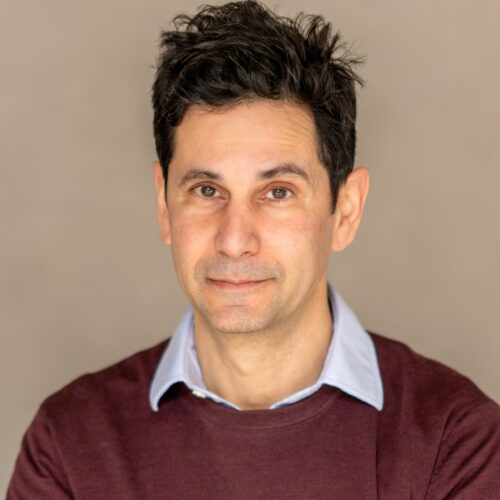
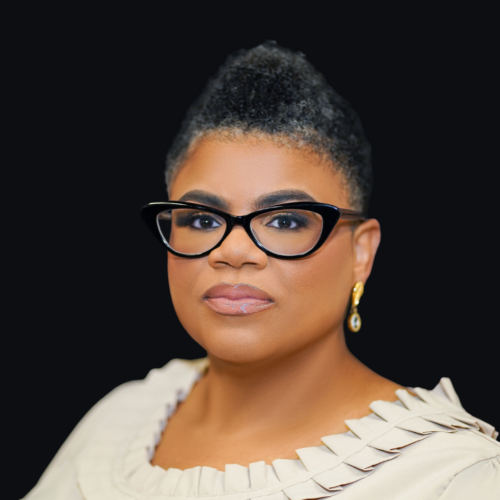
Samantha Ege and Heath Brown Win 2026 Frances “Frank” Rollin Fellowships
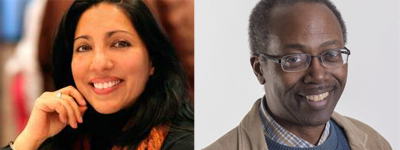
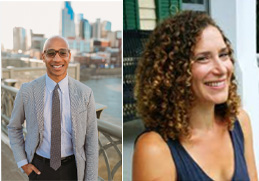
Samantha Ege and Heath Brown are the recipients of the 2026 Frances “Frank” Rollin Fellowship, awarded for biographical works-in-progress that significantly advance our understanding of the Black experience. Both writers impressed the selection committee with their vividly rendered portraits of very different subjects, each engaging and accessible to a broad general audience.

Ege won for her project, Fabulous Is the Word: The Life and Legend of Nora Douglas Holt, a biography of the Harlem Renaissance-era nonpareil who was a pioneering musicologist, composer, critic, and, as she put it, “sensual socialite.”

Brown won for his project, The Pilot of Jonestown, a biography of Norman Ijames, a Black aviator who was fatefully connected to the 1978 cult massacre at Jonestown, Guyana, a tragedy that is still seared in modern memory.

Samantha Ege is a music historian and concert pianist renowned for her work on 20th-century Black women in classical music. Her 2024 New York Times article on Nora Holt, “The Curious Case of ‘Naughty Little Nora,’ a Jazz Age Shape Shifter,” was celebrated for introducing readers to this important yet forgotten figure. Her book South Side Impresarios was widely praised, and her scholarship extends to major publications, broadcasts, and performances. As a concert pianist, she has performed internationally, championing composers such as Holt, Florence Price, and Margaret Bonds. Named a Fellow of the Royal College of Music in 2025, Ege has built an influential career on her path to reshaping musical history.

Heath Brown is a professor of public policy at the City University of New York, John Jay College of Criminal Justice. He earned an undergraduate degree in history from Guilford College in Greensboro, NC, and his master’s and PhD from The George Washington University in Washington, DC. His several books on politics and history include his most recent on the Joe Biden and Kamala Harris presidential transition: Roadblocked: Joe Biden’s Rocky Transition to the White House (University Press of Kansas, 2024). Previously, he studied radical religious movements like the Tea Party and conservative homeschooling. He’s also written for Rolling StoneThe Atlantic, and Washington Monthly magazines, as well as appeared on CNN and MSNBC.


The 2026 Frances “Frank” Rollin Fellowship marks our sixth year. When we hatched out the award’s parameters and guidelines in 2020, we felt certain that countless untold biographies were waiting out there to deepen our understanding of Black experience across the Americas — and the response proved it. Yearly, a wide range of writers have answered the call. That momentum continues to grow. The CUNY Graduate Center’s Leon Levy Center for Biography just introduced the David Levering Lewis Fellowship on the African Diaspora. Funded by the esteemed biographer’s $1 million gift, which is to be matched by the Leon Levy Foundation. As a past Leon Levy Biography Fellow, I’m excited to see the Rollin Fellowship and the Lewis Fellowship working with kindred aims to champion and expand the field of Black biography.

— Eric K. Washington, Chair, The Frances “Frank” Rollin Fellowship


BIO’s Rollin Fellowship, named for Frances (“Frank”) Anne Rollin Whipper, one of America’s first recorded African American biographers, seeks to help remediate the disproportionate reflection of Black lives and voices in published biography and to encourage diversity in the field. BIO launched the Rollin Fellowship in 2020 and first presented an award of $2,000 to a single winner in May 2021 and again in 2022. As of May 2023, with a generous donation from Kitty Kelley, BIO increased the award to $5,000 each for two winners. The fellowship also awards the recipients a year’s membership in BIO, registration to the annual BIO Conference, and publicity through BIO’s marketing channels. This year’s Rollin Prize Committee consisted of Eric K. Washington (chair), Tamara Payne, and Emily Bernard.
Apply for BIO 2026 Fellowships and Prizes

Biographers International Organization (BIO) invites applications for its 2026 fellowships and prizes, which support and celebrate the craft of biography at every stage—from dissertation research to debut works and beyond. These awards recognize exceptional promise, fund essential research, and amplify diverse voices shaping the future of biographical writing.

The Frances “Frank” Rollin Fellowship
Deadline: February 1, 2026

The Frances “Frank” Rollin Fellowship awards $5,000 each to two authors working on a biographical project about an African American figure or figures whose story deepens our understanding of the Black experience. Recipients also receive a year’s membership in BIO, registration to the annual BIO Conference, and publicity through BIO’s marketing channels.

The fellowship seeks to address the historic underrepresentation and suppression of Black lives and voices in published biographies. It reflects BIO’s commitment not only to supporting working biographers but also to advancing diversity in the field.


The Robert and Ina Caro Research/Travel Fellowship
Deadline: February 1, 2026

Established in honor of Robert and Ina Caro, this annual fellowship supports biographers with a work in progress who need funding for research trips to archives or key locations in their subjects’ lives. It reflects BIO’s dedication to helping authors produce deeply researched, context-rich biographies.


Kitty Kelley Dissertation Fellowship in Biography
Deadline: February 15, 2026

This fellowship awards $25,000 to a doctoral student writing a dissertation in English that focuses on the life of one or more individuals. The work must be biographical rather than autobiographical or fictionalized, though it need not cover an entire life.

Endowed by Kitty Kelley—a founding BIO member and author of seven bestselling biographies—the fellowship honors her lifelong advocacy for biography and biographers.


The Hazel Rowley Prize
Deadline: March 1, 2026

The Hazel Rowley Prize recognizes a first-time biographer with a $5,000 award, a professional reading by an established literary agent, a year’s BIO membership (including conference registration), and publicity through BIO’s platforms. The prize helps advance BIO’s mission to nurture emerging talent and expand the reach of biographical writing.

Hazel Rowley (1951–2011) was an award-winning biographer and devoted BIO supporter whose acclaimed works on Richard Wright, Simone de Beauvoir, Jean-Paul Sartre, and Franklin and Eleanor Roosevelt reflect her passion for the art and craft of biography.


The Clio Fellowship for Archival Research
Deadline: March 1, 2026

The Clio Fellowship awards $5,000 to one or more biographers conducting archival research for a book-length biography. Named for Clio, the Greek muse of history and memory, the fellowship is endowed by Linda Leavell, a biographer, Plutarch Award winner, and past BIO president.


The Chip Bishop Fellowship
Deadline: April 1, 2026

Established by BIO co-founder James McGrath Morris, the Chip Bishop Fellowship provides up to $2,000 in travel and related expenses—including childcare—to help aspiring biographers attend the annual BIO Conference. Registration fees are waived or refunded.

The fellowship honors Chip Bishop, who credited attending the BIO Conference with the publication of his first biography. It is open to both members and non-members working toward their first book.


If you have any questions about the fellowships, please contact BIO’s Executive Director, Michael Gately.

Shennette Garrett-Scott and Fara Dabhoiwala win 2025 Frances “Frank” Rollin Fellowships

Fara Dabhoiwala Shennette Garrett-Scott Shennette Garrett-Scott and Fara Dabhoiwala are the recipients of the 2025 Frances “Frank” Rollin Fellowship, awarded for biographical works-in-progress that significantly advance our understanding of the Black experience. The selection committee was particularly struck by the engaging clarity of their prose and how these distinguished academics bring complex histories vividly to life for a broad readership.

Garrett-Scott won for her project, Titan: The Life of Maggie Lena Walker, a biography of the pioneering early 20th-century financier and civic leader. Walker was the first Black woman in the United States to charter and lead a bank, and her visionary leadership helped establish Richmond, Virginia’s Jackson Ward as a nationally recognized “cradle of Black capitalism.”

Dabhoiwala won for his project, Black Genius: In Search of Francis Williams, which explores the life of an Enlightenment-era polymath born to enslaved African parents in Jamaica at the close of the 17th century. Educated as a free man in England, Williams later returned to Jamaica, where, as a well-positioned figure, he established a school for free Black children.

Shennette Garrett-Scott is an award-winning scholar and public historian. She serves as the Paul and Debra Gibbons Professor and Associate Professor of History and Africana Studies at Tulane University. A leading authority on Black business history, she specializes in African American women’s enterprise, labor, and activism. Her acclaimed book, Banking on Freedom: Black Women in U.S. Finance Before the New Deal (2019), has received numerous honors, including awards from the Southern Historical Association, the Association of Black Women Historians, and the Organization of American Historians (OAH). Her forthcoming book, Black Enterprise: How Black Capitalism Made America (W. W. Norton), is slated for publication in 2026.

Fara Dabhoiwala is a Professor of History at Princeton University, specializing in the social, cultural, and intellectual history of the English-speaking world from the Middle Ages to the present. Prior to joining Princeton, he spent two decades on the faculty at the University of Oxford, where he is now a life fellow of All Souls College and Exeter College. He is a regular contributor to the New York Review of Books, The Guardian, and the London Review of Books, and has produced radio and television programs for the BBC and other outlets. Dabhoiwala is the author of the widely acclaimed The Origins of Sex: A History of the First Sexual Revolution (2012), which has been translated into several languages, and of What Is Free Speech? The History of a Dangerous Idea, forthcoming this year.

BIO’s Rollin Fellowship, named for Frances (“Frank”) Anne Rollin Whipper, one of America’s first recorded African American biographers, seeks to help remediate the disproportionate reflection of Black lives and voices in published biography and to encourage diversity in the field. BIO launched the Rollin Fellowship in 2020 and first presented an award of $2,000 to a single winner in May 2021 and again in 2022. As of May 2023, with a generous donation from Kitty Kelley, BIO increased the award to $5,000 each for two winners. The fellowship also awards the recipients a year’s membership in BIO, registration to the annual BIO Conference, and publicity through BIO’s marketing channels. This year’s Rollin Prize Committee consisted of Eric K. Washington (chair), Tamara Payne, and A’Lelia Bundles.

Ramin Ganeshram and Kevin McGruder Win 2024 Rollin Fellowships

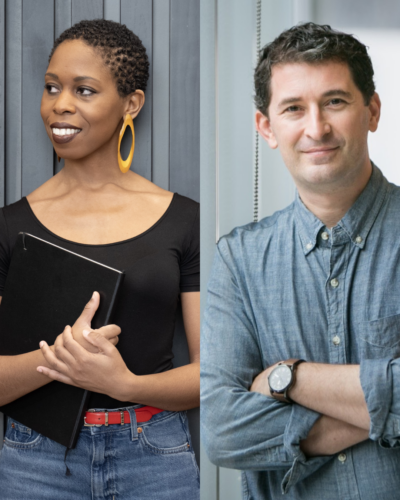
Ramin Ganeshram (left) and Kevin McGruder (right).

Ramin Ganeshram and Kevin McGruder are the winners of the 2024 Frances “Frank” Rollin Fellowship for biographical works-in-progress that make a significant contribution to our understanding of the Black experience.   

Ramin Ganeshram won for her biographical project Stirring Liberty: How George Washington’s Enslaved Chef Transformed American Cuisine and Secretly Cooked His Way to Freedom, a biography of Hercules Posey. Fortuitously after the fact, her proposed book was sold to Simon & Schuster’s 37 Ink imprint.     

Kevin McGruder won for his project Rudolph Fisher: Harlem’s Interpreter. Fisher’s concurrent medical and literary careers in the 1920s and 1930s made him a pivotal contributor to the storied intellectual and cultural movement known as the Harlem Renaissance.   

Ramin Ganeshram is an award-winning journalist and historian who is currently the Executive Director of the Westport Museum for History & Culture (formerly Westport Historical Society) in Westport, Connecticut. Ganeshram’s area of study is colonial-era American history, particularly focused on enslaved African Americans and mixed-race people. Research for her 2018 novel, The General’s Cook, led Ganeshram to discover the real-life fate of Hercules Posey, the chef enslaved by George Washington, and solving a 218-year-old historical mystery.   

For her work as curator of Westport Museum’s 2018–19 exhibit, “Remembered: The History of African Americans in Westport,” Ganeshram received the prestigious award for Leadership in the Museum Field from the New England Museum Association (NEMA). The exhibit also won awards of merit from the Connecticut League of History Associations (CLHO) and the coveted Award of Excellence from the American Association for State and Local History (AASLH).   

In 2019, Ganeshram was also awarded the Paul Cuffe Memorial Fellowship for the Study of Minorities in American Maritime History. She is a 2022/23 Fellow at the Fred W. Smith Library for the Study of George Washington at Mount Vernon. Ganeshram is currently working on a book about how the Caribbean influenced North American cuisine as part of the Atlantic Trade.   

Kevin McGruder a native of Toledo, Ohio, is an associate professor of History at Antioch College in Yellow Springs, Ohio. He earned a B.A. in Economics from Harvard University in 1979; after moving to New York in 1982, he earned an M.B.A. in Real Estate Finance from Columbia University, and subsequently earned his doctorate in U.S. History at the Graduate Center of City University of New York. In the 1980s and 1990s, he worked in nonprofit community development in Harlem, including as Director of Real Estate Development with the Abyssinian Development Corporation, an affiliate of the famous Abyssinian Baptist Church.   

Over the years McGruder also owned and co-owned two retail shops—Home to Harlem and Harlemade Styleshop, respectively—whose books, products, and social programs particularly celebrated the Harlem Renaissance.

From 2011 to 2012, McGruder was a scholar-in-residence at the New York Public Library’s Schomburg Center for Research in Black Culture, where his doctoral dissertation expanded into the book Race and Real Estate: Conflict and Cooperation in Harlem: 1890 to 1920 (Columbia University Press, 2015). His next book was Philip Payton: The Father of Black Harlem (Columbia University Press, 2021), a biography of the founder of the Afro-American Realty Company.   

Named for Frances (“Frank”) Anne Rollin Whipper, one of America’s first recorded African American biographers, BIO’s Rollin Fellowship seeks to help remediate the disproportionate reflection of Black lives and voices in published biography and to encourage diversity in the field. BIO launched the Rollin Fellowship in 2020 and first presented an award of $2,000 to a single winner in May 2021 and again in 2022. As of May 2023, with a generous donation from Kitty Kelley, BIO increased the award to $5,000 each for two winners. The fellowship also awards the recipients a year’s membership in BIO, registration to the annual BIO Conference, and publicity through BIO’s marketing channels. This year’s Rollin Prize Committee consisted of Eric K. Washington (chair), Tamara Payne, and Rachel L. Swarns. 

Apply for BIO 2024 Fellowships and Prizes

BIO is now accepting applications for its three fellowship programs.  

  • The Frances “Frank” Rollin Fellowship awards $5,000 each to two authors working on a biographical work about an African American figure (or figures), whose story provides a significant contribution to our understanding of the Black experience. This fellowship also provides the recipients with a year’s membership in BIO, registration to the annual BIO Conference, and publicity through BIO’s marketing channels. The fellowship is open to all biographers anywhere in the world who are writing in English, who are working on a biography of an African American figure (or figures), and who are at any stage in the writing of a book-length biography. Applications are due February 1, 2024. More information about the fellowship is available here


  • The Robert and Ina Caro Research/Travel Fellowship is open to BIO members with a work in progress who wish to receive funding for research trips to archives or to important settings in their subjects’ lives. The deadline for applications is February 1, 2024. Learn more here


  • The Hazel Rowley Prize rewards a first-time biographer with: funding ($5,000 award); a careful reading from an established agent; a year’s membership in BIO (including registration to the annual BIO Conference); and publicity through BIO’s marketing channels. The prize is open to all first-time biographers anywhere in the world who are writing in English; working on a biography that has not been commissioned, contracted, or self-published; and have never published a book-length biography, autobiography, history, or work of narrative nonfiction. The deadline for applications is March 1, 2024. Click here for more information. 

Brandon R. Byrd and Lizzie Skurnick Win 2023 Frances “Frank” Rollin Fellowships

Brandon R. Byrd and Lizzie Skurnick are the winners of the 2023 Frances “Frank” Rollin Fellowship for biographical works-in-progress that make a significant contribution to our understanding of the Black experience. Byrd and Skurnick are the first double recipients of this prize since best-selling biographer Kitty Kelley, a longtime BIO Board member, earmarked a major gift of $50,000 to the Rollin Fellowship in 2022.

Byrd has won for his biography-in-progress Pap: The Life and Legacies of Benjamin Singleton (forthcoming from Vanderbilt University Press) and Skurnick has won for The Special Students: My Great-Grandfather at Harvard, His Mysterious Death, and the Rise of the Talented Tenth (forthcoming from Henry Holt & Company). The committee was impressed by Byrd’s engaging invocation of a Reconstruction-era Black emigrationist—a latter-day “Moses”—who led his people, through property ownership, to resist the forces of disenfranchisement. They were equally taken by Skurnick’s measured account of George Whitte Jordan, an ill-fated ancestor, who was among a coterie of early 20th century Black scholars that Harvard University once relegated to a discrete racial-caste category called “Special Students.”

Brandon R. Byrd  is a historian of Black intellectual and social history. He is an associate professor of History at Vanderbilt University, where he teaches graduate and undergraduate classes on African American history, United States history, Haiti, the Black Atlantic, and global Black thought, art, and politics. He is the author of  The Black Republic: African Americans and the Fate of Haiti, published by the University of Pennsylvania Press in 2020, among other books.

Lizzie Skurnick  is a writer, editor, and cultural critic. Her work has appeared in The New York Times, Time, The Boston Globe, NPR, the Los Angeles Times, and elsewhere. Her first book, Shelf Discovery: The Teen Classics We Never Stopped Reading, published by HarperCollins in 2009, is a literary and cultural history of young adult fiction based on her column of the same name.

Named for Frances (“Frank”) Anne Rollin Whipper, one of America’s first recorded African American biographers, BIO’s Rollin fellowship seeks to help remediate the disproportionate reflection of Black lives and voices in published biography and to encourage diversity in the field. The fellowship awards $5,000 to each of two recipients, along with a year’s membership in BIO, registration to the annual BIO Conference, and publicity through BIO’s marketing channels.

Apply for BIO 2023 Fellowships and Prizes

BIO encourages all members to review its four fellowships, now accepting applications for 2023. Please share information about the Rollin Fellowship, the Chip Bishop Fellowship, and the Rowley Prize, which are open to nonmembers, with your friends, colleagues, and networks.

Please note that the amounts have increased from $3,000 to $5,000 for both the Rollin Fellowship and Rowley Prize, and the number of recipients has increased from one to two for the Rollin Fellowship and from two to four for the Caro Fellowship. These increased benefits, which BIO will sustain for at least five years, are thanks to gifts from Kitty Kelley and other generous friends of BIO.

  • The Frances “Frank” Rollin Fellowship awards $5,000 each to two authors working on a biographical work about an African American figure (or figures), whose story provides a significant contribution to our understanding of the Black experience. Applications are due February 1, 2023. More information about the fellowship is available here.
  • The Robert and Ina Caro Research/Travel Fellowship awards funding to as many as four authors working on biographical works for research trips to archives or to important settings in their subjects’ lives. The deadline for applications is February 1, 2023. Learn more here.
  • The Chip Bishop Fellowship awards $1,000 to one recipient for for travel expenses, including transportation costs and child care, needed to attend the BIO Conference. The deadline for applications is April 1, 2023. Learn more here.
  • The Hazel Rowley Prize awards $5,000 to a first-time biographer whose book proposal shows exceptional merit. The deadline for applications is March 1, 2023. Click here for more information.

Kitty Kelley Funds Rollin Fellowship and Hosts Event

Longtime BIO member and BIO Board member Kitty Kelley has donated $50,000 to the organization. The generous donation will fund two annual Rollin Fellowships of $5,000 each for the next five years. The Frances “Frank” Rollin Fellowship, given to writers of exceptional biographies in progress about African American subjects, was first awarded in 2021 to Rachel L. Swarns for a multigenerational biography of an enslaved Black family torn apart by the 1838 slave sale that saved Georgetown University from financial ruin. This year, the award was bestowed upon Marion Orr for his proposed biography of former U.S. congressman Charles Diggs Jr. 

The Rollin Fellowship aims to remediate the disproportionate scarcity of, and even suppression of, Black lives and voices in the broad catalog of published biography. This fellowship reflects not only BIO’s commitment to supporting working biographers but to encouraging diversity in the field. Kelley’s donation will enable the amount of the award to increase from $2,000 to $5,000 and will double the number of recipients of the award over the next five years. Of her donation, Kelley said: “By supporting the Rollin Fellowship, I hope to bring in more young and diverse members to BIO. I hope that all Rollin recipients—and everyone who receives a BIO grant or fellowship—will pay it forward by reaching out to their colleagues and classmates.” 

In addition to her personal donation, Kelley has worked diligently with BIO’s Development Committee to raise additional funds for the organization through The Biographer’s Circle, a select group of donors who host fundraising events for BIO in their homes. On May 25, Kelley oversaw the first Biographer’s Circle Event held since the pandemic hit, at the home of Steve Rubin, consulting editor for Simon & Schuster, in Manhattan. The event raised nearly $10,000 for BIO.  

Kathleen Stone, the chair of BIO’s Development Committee, said of the event, “The spirit was warm and welcoming, typical of a BIO event, and it was a successful fundraiser. Kitty Kelley was the moving force behind the event and we owe her tremendous thanks. Thank you, Kitty, for everything from creative conception to flawless execution. We very much appreciate how generously you share your energy and talents with BIO and all of us.”  

Photo by Philip Bermingham