|
October 2024 | Volume 19 | Number 8
|
FROM THE EDITOR
This month’s TBC has us asking: Is our craft experiencing a paradigm shift? In his “President’s Letter,” BIO president Steve Paul considers the evolution of the genre and some of the conflicting qualities and intentions of autobiography versus biography in the context of some of the season’s latest releases. We’ve also curated an overview of some of the most anticipated releases. And, we’ve had the privilege of hosting a recent conversation with Jean Strouse, the first BIO Award winner in 2010, about how she has approached historical biographies for four decades.
Please share more news about your forthcoming books and travel plans. In particular, I am looking for members who would like to be featured in future “Writers at Work” columns with commentary and tips on various aspects of researching, writing, and editing biography, as well as participate in member interviews. As always, I am happy to hear from you about what you would like to see featured in TBC newsletters going forward.
Be sure to keep in touch and send along your news. The inbox is open!
Warmly,
Kristin Marguerite Doidge
|
|
|
|
PRESIDENT'S LETTER
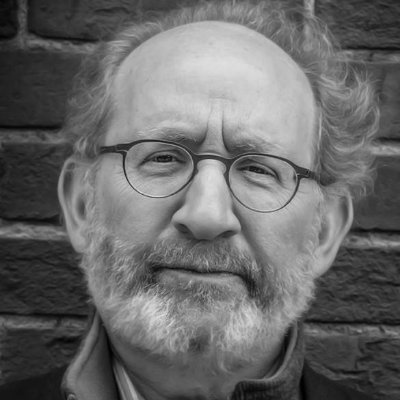 BIO president Steve Paul.
By Steve Paul
As two BIO conferences and the day-long Biography Lab approach, it seems to be a good time to think out loud about whether our craft is experiencing a paradigm shift and what that might look like.
Biography, as you well know and as BIO has long championed it, is a genre devoted to factual narrative written by an author (or authors) about someone else’s life (or lives).
The wider publishing and bookselling world usually takes a different view of “biography.” Try to find what we consider a biography at Audible.com and you’ll get an array of book covers showing mostly memoirs by famous people. Search the bookshelves at your neighborhood indie or chain store and you’re likely to encounter the same sort of mélange of political tell-alls, celebrity mea culpas, and trauma-recovery memoirs. Some of our international colleagues and writers’ organizations take a wider view of “life writing” than we as an organization embrace, accepting autobiography, for instance, under their genre tent. And recall that it was only two years ago that the Pulitzer Prize board separated biography from memoir and autobiography in its awards process, an action at least partly nudged by BIO leadership.
But the former is just one aspect of the identity irritations that have long bedeviled the world of biography as an art form and a life pursuit, as we like to think of it. What I’ve been noticing lately is something different. It’s the apparent need by some writers and publishers to distance themselves from the word “biography,” as if it’s some kind of fatal virus.
I know I’ll never forget the absolute “slap in the head” I experienced from an agent speaking in a session at one of the earliest BIO conferences. Concerning the hierarchy of biographies that publishers were interested in—she listed a series of six steps of the biographical ladder, as I recall—literary biography was dead last. And this was even before the COVID-19 pandemic of 2020. So undoubtedly, in some editorial conference rooms and agencies, the repulsion for biography is understandable. But really?
At least two biography-adjacent books on my radar this year presented themselves as self-consciously un-biographical. That is, each of the authors aimed to distinguish their books from conventional, “objective,” cradle-to-grave biographies, because, well, that style is so boring or old-school or inadequate to serve the creative needs of the workshop-trained authors of today. And let’s not even get into a debate over “objectivity,” which I daresay hardly exists even in the traditionally styled biographies of today. Every author brings a subjective point of view to the life they are studying and writing about.
Nevertheless, we know biography is going through a fascinating phase. It’s not a transition from one form of craft to another. It seems to be an expansion, as the field of biography encompasses more creative, less rigorously delineated cradle-to-grave approaches. We’ve long been comfortable with the so-called “slice-of-life” biographies, which have met with great success for their ability to bring new details and new insights into the lives of major figures whom we thought we already knew. (I’m thinking here of Candice Millard, Ted Widmer, and others.) Also attractive, of course, to readers and publishers alike is how slice-of-life bios take up far fewer pages than the doorstop-tomes for which big biography has long been known.
The edges today are being stretched organically from the bottom up, by the impulses and persistence of writers, and from the top down, by perhaps a generational shift in the tastes and desires of editors, publishers, and their marketing operations. In many cases, this involves various forms of hybridization, especially a style that blends biography with memoir. This is not autobiography, which is another thing entirely. It involves an author writing about another person’s life through the lens of more than routine personal experience.
In writing what looks like a biography of Joni Mitchell, for example, Ann Powers proudly wears her cloak of a music writer and draws on her own sensory relationship and response to Mitchell’s work over the decades. Yet, in Traveling: On the Path of Joni Mitchell (Dey Street), Powers goes so far as to misrepresent the nature of biography and to think she’s onto something more creatively successful.
“I’m not a biographer,” she writes, “in the usual definition of that term; something in me instinctively opposes the idea that one person can sort through all the facts of another’s life and come up with anything close to that stranger’s true story.” Powers instead wants to be seen as a music critic and a “mapmaker,” who can “guide others along the trajectories of artists who are always one step ahead of me.”
Just when a reader is beginning to wonder whether Powers knows anything about biography, she continues: “As I tried to keep up, I had to embrace a new way of writing that made room for gaps, inconsistencies and contradictions, honoring those unstable elements essential to a story well told.”
A “new way of writing”! Isn’t that something? All I have to say is, well, Ann, welcome to biography. This is what we do day in and day out. I can think of several hybrid biographies of recent years that succeeded in what they were aiming to do without being defensive or feeling haughtily superior to the craft. (Megan Marshall’s book on Elizabeth Bishop comes to mind.)
Alexis Pauline Gumbs takes an entirely different and highly creative approach in Survival Is a Promise: The Eternal Life of Audre Lorde (Farrar, Straus and Giroux, 2024). Gumbs certainly presents a chronological thread of Lorde’s life, from extremely challenging childhood to esteemed feminist, outspoken lesbian, and poet. But she does it in a time-shifting, theme-and-variation, sensory swirl. As a reader, frankly, I’m sold. As a biographer, I’m wondering how many of us could do anything similar and under what circumstances. The empathetic and poetic writing, of course, elevates Gumbs’s case.
A headline writer for The Atlantic didn’t do biography any favors when topping its review of Gumbs’s book with this generic indignity: “A Book that Puts the Life Back into Biography.” Yet, Danielle Amir Jackson’s review is concise and hard to argue with: “Foregrounding the often-difficult conditions that shaped her, Gumbs’s book revels in Lorde’s lush multiplicity, moving through the ebbs and flows of her life with both precision and lyricism and expanding the limits of what a biography can be and hold and feel like.”
So, we and our editors and our conference-goers might well ask: Just what are the limits of biography? Or are there really any limits? The point, I think, is that the craft is ever-evolving. It so happens that I’m currently reading a “composite biography” of F. Scott Fitzgerald, an edited volume for which 23 scholars were assigned two-year chunks to focus closely on the writer’s life.
When planning for BIO’s forthcoming conference on Black biography next March, I was pointed (a hat tip to Eric K. Washington for this) toward an essay that Arnold Rampersad—the esteemed biographer of Langston Hughes, Jackie Robinson, and others—wrote in the early 1980s. While outlining the state of modern biography in general, he was wondering about the nature of Black biography. Rampersad recognized the unstable ground that existed between psychological and less scientific approaches, a tension and an uncertainty that caused wide suspicion of biography as it had been (and often still is) practiced, especially among potential subjects who were writers and artists themselves. He was trying to weigh the value of Freud’s pronouncement that “biographical truth is not to be had.”
He also analyzed the mostly conflicting qualities and intentions of autobiography versus biography. Up to that point Black literature had been dominated by autobiography (by Frederick Douglass, W. E. B. DuBois, et al.). “Within black America,” he writes, “the idea of the self as a refuge of dignity and privacy in a humiliating world has been essential.”
Still, the tide was beginning to turn. Rampersad had noticed a surge of biographical projects by Black writers, and he was essentially setting out a challenge to Black writers to take seriously the need for researching and writing intelligently and engagingly about the long and troubling sweep of Black lives in America: “The rise of biography suggests, in any case, a realignment of the place of the black individual in the modern world.”
Although modern biography contains a minefield of issues relating to privacy, agendas, and the nature of truth, Rampersad writes, “the form appears to possess the momentum of inevitability,” and Black writers “should acknowledge its force.” Much has caught up with Rampersad’s thinking in the last four decades.
John A. Farrell took up a different issue in a Facebook post this summer, wondering why The New York Times essentially overlooked biography in its (yawn) list of best books of the 21st century, a list dominated by fiction and memoir. But Farrell’s argument for raising the profile of biography also included the idea that “we as biographers, and a biographers’ organization, recognize and champion stylistic boldness, literary flair, and evocative prose (think Evan S. Connell’s Son of the Morning Star) as well as depth of research.” This is a flag well worth carrying.
Steve Paul, BIO’s president, is currently at work on a biography of the American poet William Stafford.
|
|
|
|
CRAFT TALK
Biographer Jean Strouse on Spending Time with our Subjects
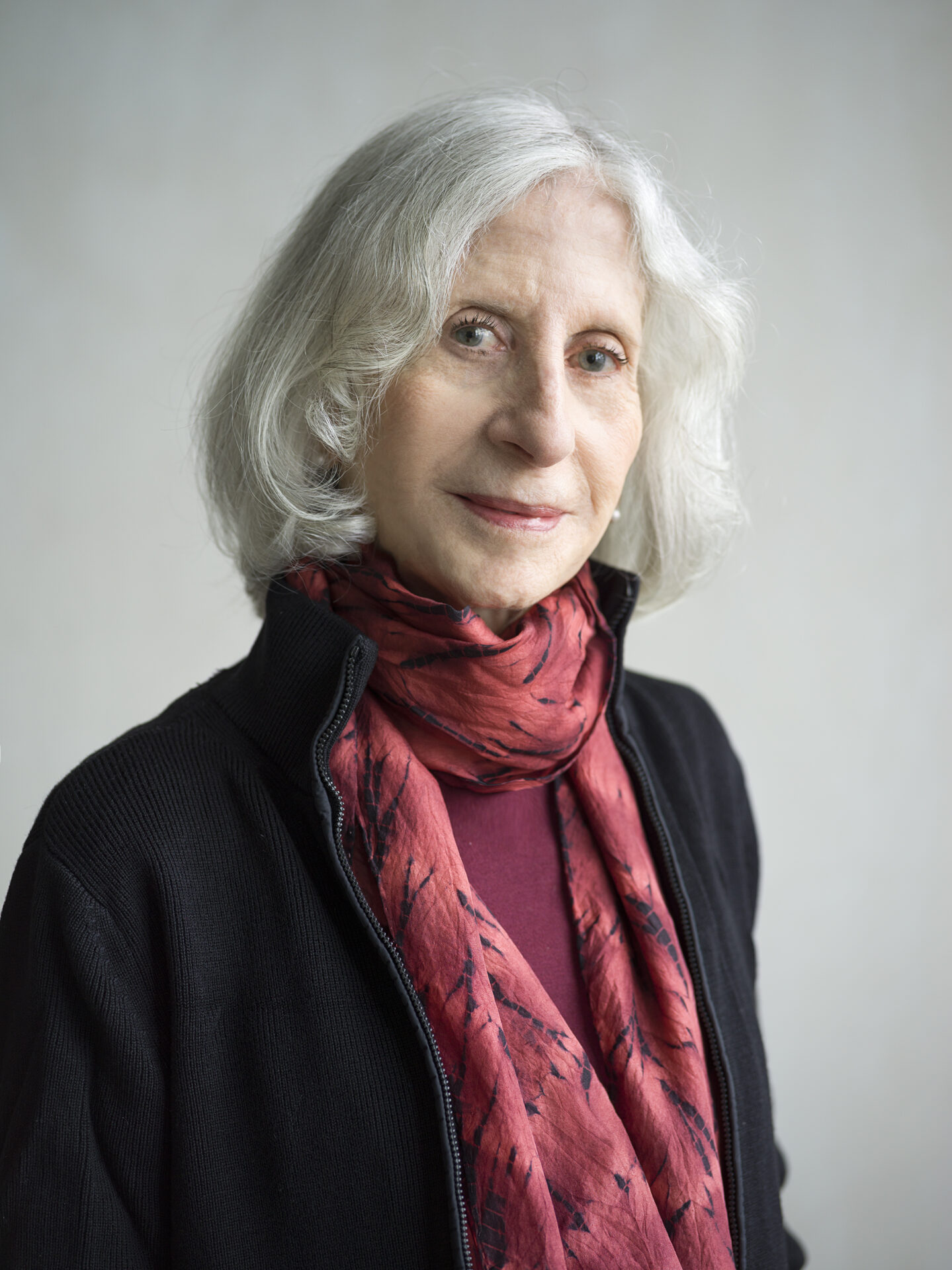 Photo by Nina Subin.
By Kristin Marguerite Doidge
Jean Strouse is the author of Morgan: American Financier (Random House, 1999) and Alice James: A Biography, (Houghton Mifflin Company, 1980), which won the Bancroft Prize in American History. Her essays and reviews have appeared in The New Yorker, The New York Review of Books, The New York Times, Architectural Digest, Newsweek, and other publications. She has been a Fellow of the MacArthur Foundation and served as director of the Cullman Center for Scholars and Writers at The New York Public Library from 2003 to 2017.
Her new book, Family Romance: John Singer Sargent and the Wertheimers, will be published by Farrar, Straus and Giroux in November 2024.
The Biographers Craft: Do you see yourself as a biographer or a historian?
Jean Strouse: Biographer, historian, psychologist, novelist—do I have to choose just one? By “novelist,” I mean regarding the craft of telling stories, not making things up!
When I was in college, you were not supposed to pay attention to the life of a writer—just to the words on the page. After graduating, I started reading biographies. Nancy Milford’s book about Zelda Fitzgerald (Zelda: A Biography), first published in 1970, had an enormous impact on many people, including me. To shift the focus to a woman we had known only in the life of a famous man (F. Scott Fitzgerald), to take a woman’s point of view, was revolutionary.
Suddenly, it seemed, the lives of women we hadn’t previously looked at could open new doors on the past. I wanted to try, and flirted with a couple of other subjects before deciding to write about Alice James. Almost no one had heard of her, and those who had, knew her only as a sister of famous men: Henry and William James. She wasn’t an obvious biographical subject: she wasn’t famous or glamorous, didn’t leave a body of great work, spent much of her life as an invalid, struggling with mysterious “nervous” disorders.
TBC: What was it like digging into her material?
Strouse: Fortunately for a biographer, the James family was well-known, which meant among other things that there were rich archives. People saved the James’s letters. Moreover, members of the family wrote to each other all the time. Someone was almost always on the other side of the Atlantic, and two-way conversations took place on paper between America and Europe for years.
Reading through the James’s letters, journals, and books 100 years after they were written was an extraordinary experience: I slowly got to “know” the members of the family, could almost hear their voices and imagine Henry correcting my sentences. There’s nothing mystical about that; just a deep immersion in other people’s lives.
TBC: Indeed! You spent 15 years on Morgan—what made that research and writing process unique?
Strouse: After Alice James was published, people came to me with ideas for books about the daughters and wives and sisters of famous men. And I thought, I just wrote that book; I want to do something different. I had greatly enjoyed the history and social-history aspects of the James story. And after a while, I decided it would be fun to write about a bad guy.
At dinner one night, a friend of mine said, “robber barons.” I thought, “Oh, bad guys.” As I started reading about that chapter of American history, J. P. Morgan seemed the most interesting character, both because of who he was and the ways in which his life intersected with those of many other Gilded Age figures. And I eventually learned that the Morgan Library in New York had a basement full of uncatalogued family papers, art dealing and art collecting records, business accounts, and more. A mountain of new material about a person who’d often been written about before seemed irresistible. I knew nothing about finance; not even the difference between a stock and a bond. I stepped off a cliff.
It took me years to read through all that material and learn how to think about it.
Unlike the Jameses, Morgan was not introspective or intellectual; he never explained his actions. He kept a plaque over the mantel in his study that said: “Pense moult, parle peu, écris rien.” “Think a lot, say little, write nothing.” Not what a biographer wants to hear.
Eventually, a very generous friend helped me understand Morgan’s deals and the financial history of that time. Then late in the writing process, one of Morgan’s descendants called me and said, “I think you’d better get over here.” She had opened a closet in her grandmother’s New York apartment and found a trove of letters and diaries. The grandmother was the daughter of Morgan’s favorite daughter—it was her granddaughter, four generations down from Morgan himself, who found those untouched family papers. Of course I read through them, even though I had thought I was almost finished. They were fantastic, providing inside, humanizing views of a very public figure. At one point I thought: here I am writing about one of the most powerful men in the Gilded Age, and I’m still doing women’s history.
And, over all those years (15!) I changed my mind about Morgan—or rather, he changed my mind. I’d gone looking for a robber baron/bad guy. What I eventually found was a man who spent much of his life raising capital in Europe to build America’s new infrastructure when there was simply not enough money here for hugely expensive enterprises. Morgan was no saint, but he tried to be a disciplinary force in the chaotically emerging U.S. economy, appointing himself to act as the country’s unofficial central bank before we had a federal reserve.
TBC: What’s it like to turn the page and start anew on another project after spending that much time with one person?
Strouse: I didn’t right away. Morgan came out in 1999. For a few years, I worked in journalism, consulting, and teaching, then took a full-time job as director of the Cullman Center for Scholars and Writers at The New York Public Library.
In 2001, I saw an exhibition of 12 portraits of one family by John Singer Sargent—the father of the family was an eminent London art dealer of German Jewish descent named Asher Wertheimer. Asher and his wife had 10 children and commissioned the leading portrait artist of the time, an American expatriate living in London, to paint them all. It was Sargent’s largest commission, which made Wertheimer his greatest private patron. The exhibition’s photographs and text made it clear that the artist and subjects became good friends.
I “knew” Sargent slightly from my work on the Jameses and Morgan and thought of him as a painter of European aristocrats and Boston Brahmins—not of Jews. These paintings, and the stories they might tell, seemed more than intriguing, but as I said, I was not looking for a new book project in 2001. Still, I bought the exhibition catalogue and continued to think about all these people and to read whatever I could find about them. The rest is a long story. The short version is that I eventually did decide to write the book, which will now be published in November. A few lines from the introduction:
“The stories of Sargent and the Wertheimers are suffused with light and shade—with incandescent talent, singular beauty, glittering friendships, wealth, secrets, conflict, bigotry, loss, early death. The Wertheimer portraits met with acclaim and rancor when they were first exhibited between 1898 and 1908, and again in the 1920s. Then they were stored out of sight for decades. And, surprising as it seems in light of Sargent’s current popularity, he was effectively ‘canceled’ for much of the twentieth century. Family Romance traces those arcs.”
TBC: Do you have a favorite of the three books?
Strouse: It’s hard to compare; they’re so different. As you may have noticed, all three are set in the same time period—late 19th /early 20th century—and all three center on Americans who either lived or spent a great deal of time in England. Family Romance was the most fun to write, mainly because I liked the characters so much, especially Sargent. I was deeply interested in Alice James and J. Pierpont Morgan, but both were difficult to live with, for their relatives and friends, and for me.
Alice James might be my favorite since it was virgin territory (pun sort of intended), and I was just learning how to tell the story of a life. It is being reissued by Farrar, Straus and Giroux this fall, along with Family Romance—with a Sargent painting on the cover.
This interview has been edited for length and clarity.
|
|
|
|
FALL BIOGRAPHY OVERVIEW
What’s trending and most anticipated this season in biography? Science, unsung heroes/heroines, historical/civil rights, and artists/literary icons are among the top themes in biographies hitting the shelves this fall—and many of the books encapsulate more than one of these categories.
Science
Cambridge University Press will publish Steven Weinberg: A Life in Physics on December 31. The Nobel Laureate shares his candid thoughts, in his own words, on theoretical physics and cosmology, along with personal anecdotes and recollections of the people who helped shape his career, especially during and after the golden age of particle physics in the 1970s.
Penguin Random House/Rodale published Dr. Ruth Westheimer’s final book, The Joy of Connections: 100 Ways to Beat Loneliness and Live a Happier and More Meaningful Life in September. The late Dr. Ruth, with BIO member and Emmy Award–winning journalist Allison Gilbert and longtime collaborator Pierre Lehu, provides practical and creative strategies for finding friends, community, and intimacy. Anchored by her own story, from the horrific loneliness of losing her family in the Holocaust to living in an orphanage to rebuilding her life in America and eventually becoming a world-renowned sex therapist, the book is perhaps the kick in the pants we all need in order to start seeking—and finding—deep and lasting human connections.
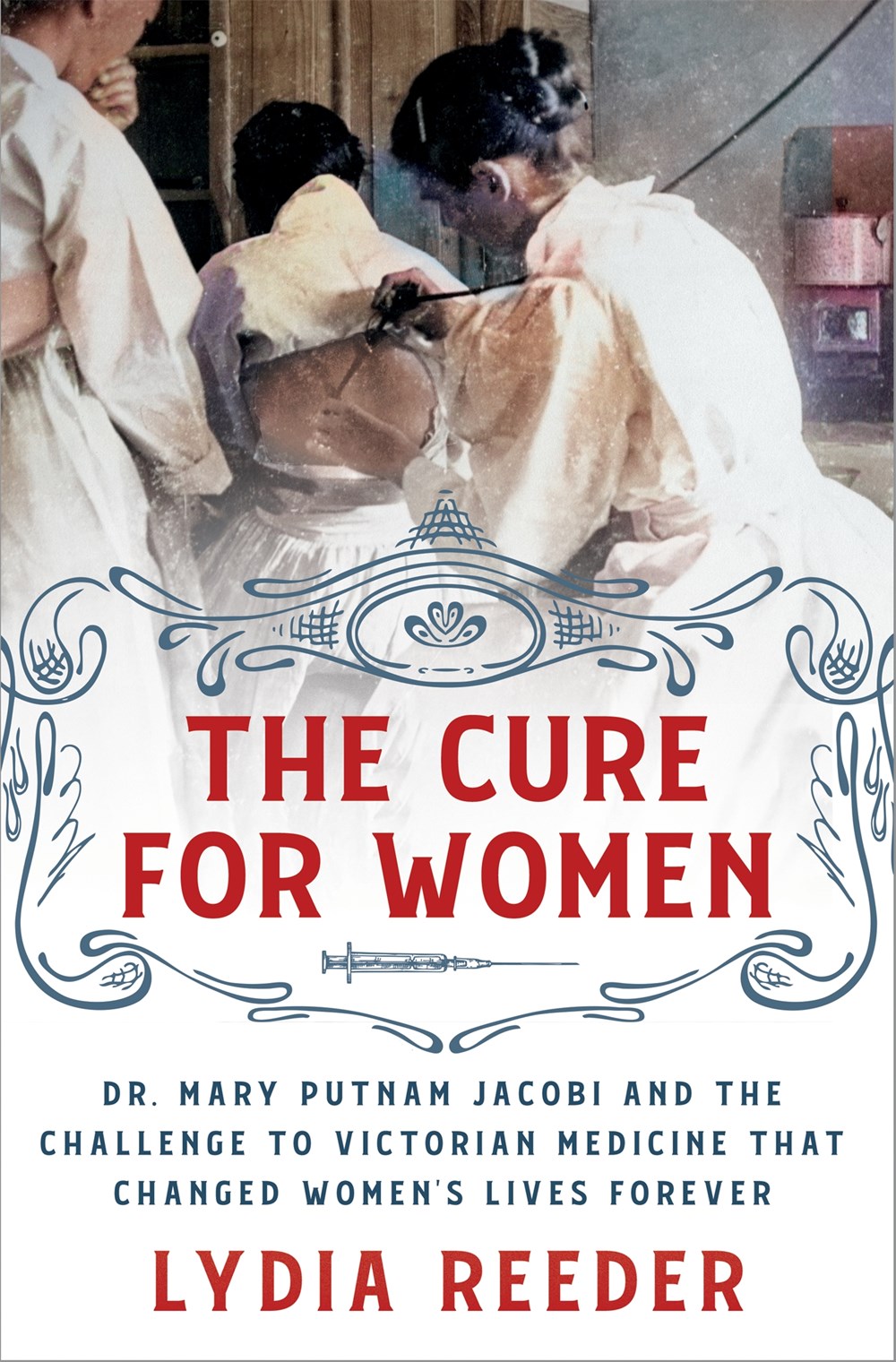
Lydia Reeder’s The Cure for Women: Dr. Mary Putnam Jacobi and the Challenge to Victorian Medicine That Changed Women’s Lives Forever will be published by St. Martin’s Press on December 3. Mary Putnam Jacobi, daughter of New York publisher George Palmer Putnam, became the first woman to be accepted into the world-renowned Sorbonne medical school in Paris. Full of larger-than-life characters and cinematically written, The Cure for Women documents the birth of a sexist science still haunting us today as the fight for control of women’s bodies and lives continues—and shines as a glowing example of Reeder’s mission to highlight the stories of little-known or forgotten pioneers in their professions and daily lives.
Unsung Heroes/Heroines
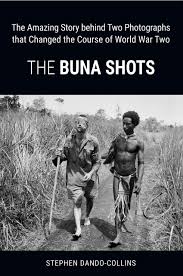
Australian Scholarly Publishing will release Stephen Dando-Collins’s THE BUNA SHOTS: The Amazing Story Behind Two Photographs that Changed the Course of World War Two in November. This biography links two combat photographers—American LIFE magazine photographer George Strock and New Zealand-born Australian Government photographer George Silk—and centers on photographs they took within days, and within miles, of each other at Buna in New Guinea in December 1942.
Renowned biographer and BIO member Iris Jamahl Dunkle’s recent book, Riding Like the Wind: The Life of Sanora Babb, was just released by University of California Press on October 15. This saga of a writer done dirty resurrects the silenced voice of Sanora Babb, peerless author of mid-century American literature. Dunkle follows Babb from her impoverished childhood in eastern Colorado to California. On her own merits, Babb’s impact was profound. In fact, it was Babb’s field notes and oral histories of migrant farmworkers that John Steinbeck relied on to write his 1939 novel The Grapes of Wrath.
Karen Fang’s Background Artist: The Life and Work of Tyrus Wong was published on October 11 by Rutgers University Press. Background Artist shares the inspiring story of Tyrus Wong’s remarkable 106-year life and showcases his wide array of creative work—from the paintings and fine art prints he made for Roosevelt’s Works Progress Administration to the unique handmade kites he designed and flew on Santa Monica beach. The book celebrates a multi-talented Asian American artist and pioneer.
Ida Lupino, Forgotten Auteur: From Film Noir to the Director’s Chair will be published by University of Texas Press on December 10. Author and filmmaker Alexandra Seros tells the story of Lupino, one of the few female directors in Classical Hollywood and the only woman with membership in the Directors Guild of America between 1948 and 1971. Using archival materials from collections housed around the world, the book provides rich insights into three of Lupino’s independently directed films and a number of episodes from her vast television oeuvre. Seros contextualizes this analysis with discussions of gendered labor in the film industry.
History & Politics
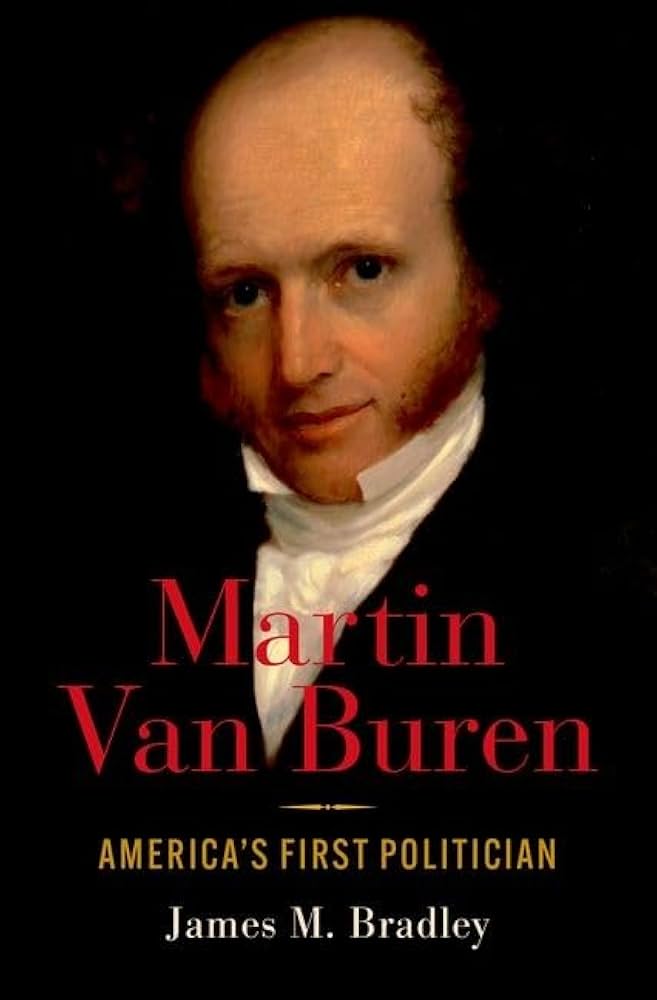
Oxford University Press will publish BIO member James M. Bradley’s new biography, Martin Van Buren: America’s First Politician, on December 2. The 632-page tome—the first full-scale portrait of Van Buren in four decades—charts his ascent from a tavern in the Hudson Valley to the presidency, concluding with his late-career involvement in an antislavery movement. The book also offers vivid profiles of the day’s leading figures—such as Andrew Jackson, Henry Clay, John C. Calhoun, John Quincy Adams, DeWitt Clinton, and James K. Polk—during the tumultuous decades leading up to the Civil War.
OUP published Dickinson expert Jane E. Calvert’s Penman of the Founding: A Biography of John Dickinson on October 11. In a follow-up to her 2009 book, Quaker Constitutionalism and the Political Thought of John Dickinson, Calvert provides a more progressive view on a traditionally conservative founding father, who was the only leading figure of the time to free his slaves, become an abolitionist, and advocate for women’s rights. She also highlights the complexities of Dickinson’s legacy and explores the reasons America’s first celebrity is virtually unknown today.
Simon & Schuster published John Lewis: A Life by BIO member David Greenberg on October 8. Drawing from archived documents and hundreds of interviews, Greenberg tracks the congressman and civil rights leader from his childhood in rural Alabama, through the marches on Washington and Selma, to his political career in Georgia.
The Last Tsar: The Abdication of Nicholas II and the Fall of the Romanovs will be published by Basic Books on December 3. Author Tsuyoshi Hasegawa relied on a trove of new archival discoveries to narrate how Nicholas’s resistance to reform doomed the monarchy in Imperial Russia. Encompassing the captivating personalities of the era, the book untangles the struggles between the increasingly isolated Nicholas and Alexandra and the factions of scheming nobles, ruthless legislators, and pragmatic generals who sought to stabilize the restive Russian empire, either with the Tsar or without him.
Fine Arts & Literature
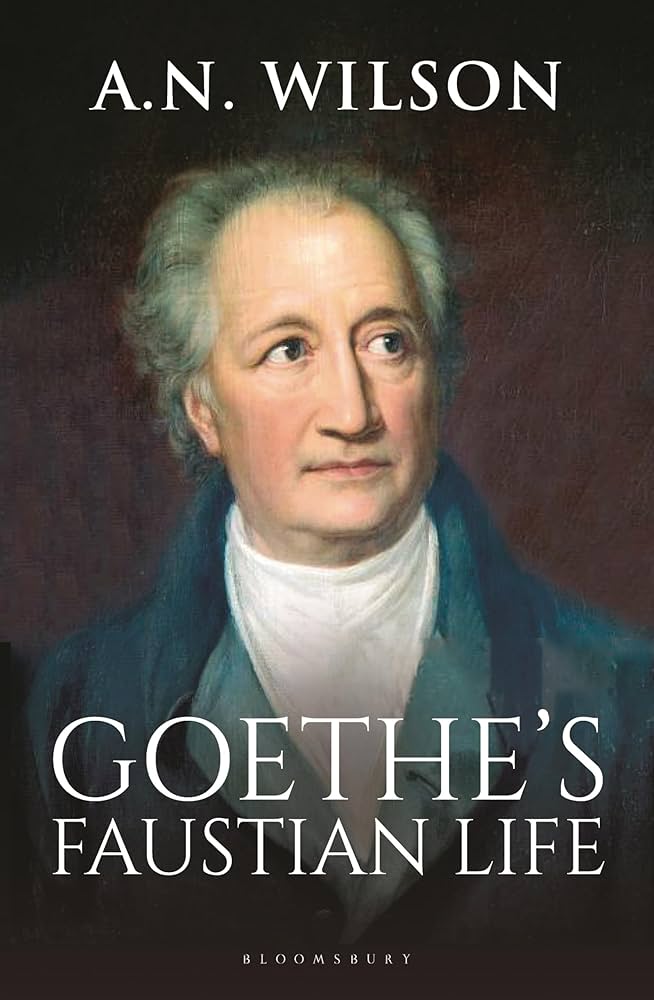
Bloomsbury Continuum will release A. N. Wilson’s groundbreaking biography, Goethe, His Faustian Life – The Extraordinary Story of Modern Germany, a Troubled Genius and the Poem that Made Our World, on December 3. Wilson, the prolific and award-winning biographer and celebrated novelist—who wrote biographies of Tolstoy, C. S. Lewis, Milton, Hilaire Belloc, and Goethe and won the 2021 BIO Plutarch Award for The Mystery of Charles Dickens—argues that it was Goethe’s genius and insatiable curiosity that helped catapult the Western world into the modern era. Wilson traces Goethe from his youth as a wild literary prodigy to his later years as Germany’s most respected elder statesman and hones in on his undying obsession with the work he would spend his entire life writing: Faust.
BIO Award winner Jean Strouse’s Family Romance: John Singer Sargent and the Wertheimers will be published by Farrar, Straus and Giroux in November. Strouse looks at 12 portraits of one English family painted by the expatriate American artist at the height of his career—and at the intersections of all these lives with the sparkle and strife of the Edwardian age. Her account, set primarily in England around the turn of the 20th century, takes in the declining fortunes of the British aristocracy and the dramatic rise of new power and wealth on both sides of the Atlantic. Sargent brilliantly portrayed these transformations, in which the Wertheimers were key players, and Family Romance brings their interwoven stories fully to life for the first time.
Please note, the above list is not exhaustive. In BIO’s monthly newsletter, The Insider, new book releases for that month are provided. We do our best to track down all new biography information. If you would like to make sure we have word of your new book, please reply to this email, or send an email to: editortbc@biographersinternational.org.
|
|
|
|
ARCHIVIST INTERVIEW
The Manuscripts Collection at the American Antiquarian Society
By Elizabeth Schott
Are you grappling with finding the subject for your next book? You have come to the right place! This fourth installment of our “Hidden Collections” feature is provided by Vanessa Wilkie, Ph.D., who is the William A. Moffett Senior Curator of Medieval Manuscripts & British History and Head of Library Curatorial at The Huntington Library, Art Museum, and Botanical Gardens.
How do you access the collection?
The Huntington collections are vast so there are numerous access points. And, because we are a library, art museum, and botanical gardens, our collections are described according to different professional standards. (That’s right, the plants count as collections, too!) The best way to get an overview of all three collecting areas is on our website here.
In the library, Summon Discover is our broadest search tool, but there are lots of other ways into the library’s collections, including those digitized on the Huntington Digital Library (HDL). With 12 million items and counting in the library, it is impossible to digitize everything, but we add to the HDL regularly. The library also has Online Research Guides that are field/collection/subject specific and offer some much-needed guidance about how to navigate complicated collections. I’m partial to the British Historical Manuscripts Guide and the Medieval Manuscripts Guide, but you can’t go wrong reading all of them closely.
Another way into the collections is by following footnotes. Personally, that is my favorite path to take! I love getting emails from researchers around the world who send me a footnote and ask what it is and what it relates to. It is like putting a key into a lock that opens a door to another world!
The best way to start a conversation to learn more about what collections we have in the library is with our fantastic Reference Team. They can be reached at: reference@huntington.org.
You can also contact the curator in your particular area via this directory. Email is the best way to reach me with questions about British history, British Atlantic history, British manuscripts, and Medieval manuscripts: vwilkie@huntington.org.
What is your favorite overlooked archive?
I find myself often trying to work the John Packes Newsletters into conversations with Huntington readers when they first arrive. John Packes was a clerk for the English grocer and merchant Thomas Woods. Packes wrote Wood several times a month over the course of decades in the 17th century, describing the commodities coming in to London docks and shifts in business. The letters aren’t flashy or gossipy, but they paint a picture of the impact of empire and early-modern global trade from an on-the-ground perspective. Packes is a bit dry and grumpy, but when you really dig in, you see a world taking shape all around you. By the end of the collection, Packes had considerably aged and his handwriting changes rather abruptly, suggesting he may have had a stroke. I use these letters when I teach paleography to remind students that people’s handwriting changes over time.
I’d be remiss not to also bring up the Townshend Family Papers. This is a multi-generational family archive of 131 boxes filled with family drama, poetry, politics, religion, local/national/international affairs, financial records, and all the rest that spans centuries! It came to The Huntington in several installments, with the last portion arriving in 2000. Gayle Richardson, one of our outstanding processing archivists, worked on it for years and it opened maybe seven or eight years ago. Researchers come from all over the world to use our iconic Stowe, Hastings, and Ellesmere collections, but they often overlook Townshend. It is strong in the 18th century, and I am eager for more researchers to work with it and explore its depths.
Is there a new, shiny archive you’d like to reveal?
It is a single manuscript, not an archive, and I’m uncomfortable calling it “shiny” because of the severity of the contents, but I want people to know about the Robert Bristow Plantation Ledger. It spans 1660 to 1707 and accounts for the establishment of several Virginia plantations. The manuscript contains detailed information about forced labor and quantifies the shift from plantation systems based on indentured servants to Black enslaved people. After Bacon’s Rebellion, Bristow fled back to England where he ultimately became a director in the Royal African Company as enslaved labor expanded in his Virginia plantations. The Huntington just acquired this manuscript in March 2024, and it is already fully digitized, ready for deep study. It is complex and often difficult to read (both because of the subjects and because of the hands), but this volume will support a lot of valuable lines of inquiry and I’m certain researchers will do important work with it.
Which institution should we contact next?
Heather Wolfe at The Folger Shakespeare Library. The Folger recently re-opened after four and a half years of renovations, and we’re all eager to hear what’s new!
Liz Schott is working on a biography of mid-century modern weaver and textile designer Dorothy Liebes.
|
|
|
|
AMANUENSIS
“Correcting for the Male Gaze: On the Unique Challenges of Writing Biographies of Women”
by Iris Jamahl Dunkle
(originally published on Literary Hub)
You might know Sanora Babb as the wife of the Academy Award-winning cinematographer James Wong Howe. She also had many tantalizing affairs with the likes of Ralph Ellison and Harry Stetson (yes, of the hats). And young writers like William Saroyan and Carlos Bulosan were madly in love with her in the 1920s and 30s. It’s hot, right? You want to know more.
But how seriously would you take her if this is how I introduced her to you? Would you care as much about the more important hook in her story, that the writer John Steinbeck appropriated material from the field notes she took while working in the FSA camps in California in 1938-39? Or that because he did so, the novel she was writing, Whose Names Are Unknown, which was under contract with Random House, would be dropped just three weeks before publication and wouldn’t be published until 2004 when she was on her deathbed? While his novel, Grapes of Wrath, would go on to win a Pulitzer Prize, taught across American high school classrooms, still an NEA Big Read? FULL ESSAY
Amanuensis: A person whose employment is to write what another dictates, or to copy what another has written. Source: Webster’s Revised Unabridged Dictionary (1913).
|
|
|
|
|
BIO PODCAST
Patti Hartigan and Benjamin Taylor
Recently on the BIO Podcast, Sonja Williams interviewed Patti Hartigan, author of August Wilson: A Life (Simon & Schuster, 2023), and Gretchen Holbrook Gerzina interviewed Benjamin Taylor, author of Chasing Bright Medusas: The Life of Willa Cather (Viking, 2023). A new episode of the podcast is released every Friday on the BIO website and wherever you listen to your podcasts.
|
|
|
|
KEEP YOUR INFO CURRENT
Making a move or just changed your email? We ask BIO members to keep their contact information up to date, so we and other members know where to find you. Update your information in the Member Area of the BIO website.
|
|
|
MEMBERSHIP UP FOR RENEWAL?
Please respond promptly to your membership renewal notice. As a nonprofit organization, BIO depends on members’ dues to fund our annual conference, the publication of this newsletter, and the other work we do to support biographers around the world.
|
|
|
|
|
|
BIO BOARD OF DIRECTORS
Steve Paul, President
Heather Clark, Vice President
Marc Leepson, Treasurer
Kathleen Stone, Secretary
Michael Gately, Executive Director
Kai Bird
Natalie Dykstra
Gretchen Holbrook Gerzina
Carla Kaplan
Kitty Kelley
Diane Kiesel
Sarah S. Kilborne
Linda Leavell
Heath Lee
Susan Page
Tamara Payne
Barbara Lehman Smith
Will Swift
Eric K. Washington
Sonja D. Williams
ADVISORY COUNCIL
Debby Applegate, Chair • Taylor Branch • A’Lelia Bundles • Robert Caro • Ron Chernow • Tim Duggan • John A. Farrell • Caroline Fraser • Irwin Gellman • Michael Holroyd • Peniel Joseph • Hermione Lee • David Levering Lewis • Andrew Lownie • Megan Marshall • John Matteson • Jon Meacham • Marion Meade • Candice Millard • James McGrath Morris • Andrew Morton • Hans Renders • Stacy Schiff • Gayfryd Steinberg • T. J. Stiles • Rachel Swarns • William Taubman • Claire Tomalin
|
|
|
THE BIOGRAPHER'S CRAFT
Editor
Jared Stearns
Associate Editor
Melanie R. Meadors
Consulting Editor
James McGrath Morris
Copy Editor
James Bradley
|
|
|
|