|
May 2024 | Volume 19 | Number 3
|
FROM THE EDITOR
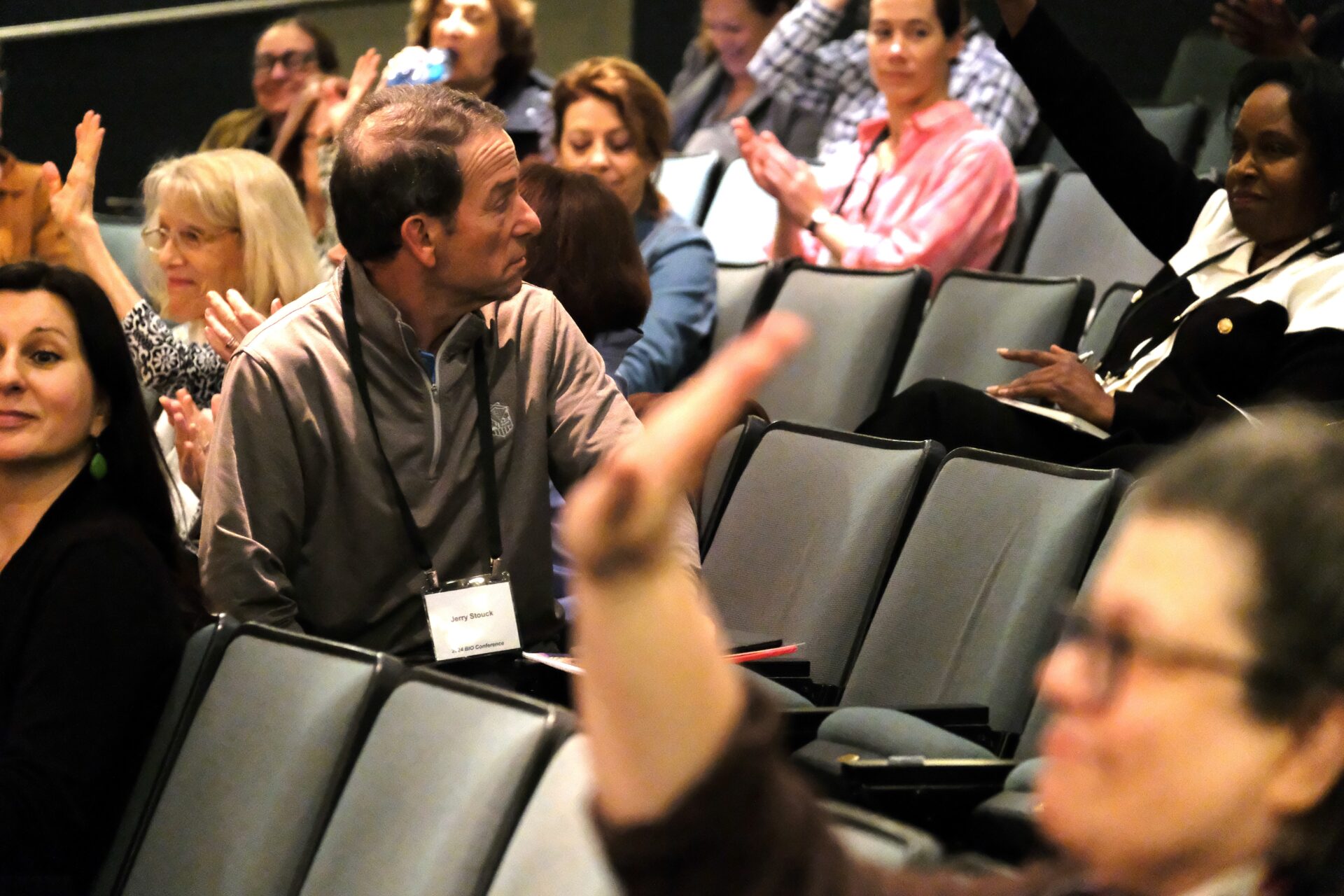
The photo above was taken at the BIO Conference by Brennan Cavanaugh. As to what the show of hands is about, you will learn in the President’s Letter below.
If you attended this year’s BIO Conference, I hope you are still buzzing with inspiration for your biographical pursuits. If you were not able to attend, then this edition of The Biographer’s Craft will hopefully provide a spark of its own. Below, BIO president Steve Paul sets the scene by reporting on both the broad strokes and some finer details of this year’s conference. Then, two of our conference correspondents have written recaps of two panels.
I’d like to especially thank everyone who volunteered to be a correspondent and who has either already written, or is now working on, their recaps so that the whole membership may benefit from panel insights this summer. Their work is especially critical for the many panels that were not recorded and is useful even for those who did attend in-person, as the simultaneous sessions prevented attendees from seeing everything. So, many, many thanks for your contributions!
Thanks, also, to everyone who took the time to introduce themselves to me and chat at the conference. This year marks the first time I have attended in-person since taking the editor position, and I am so grateful to have met many of you “in real life.”
Please keep the conversations, news, and suggestions rolling in—and drop a line here.
Sincerely,
Holly
|
|
|
|
PRESIDENT’S LETTER
Inspiration and Fellowship are Hallmarks of BIO’s Annual Conference
By Steve Paul
The first BIO Conference I attended, in 2016, followed my retirement from daily journalism. We gathered in Richmond, Virginia. I knew hardly anyone. But one serendipitous connection led to the sale of the book I was hoping to finish. My new editor gave me about three months to polish and submit the manuscript I’d been tinkering with for years. The book, my first biography, came out the next year from a mid-size trade publisher, and then, six months later, my editor was laid off. It’s still unclear to me whether those two events were directly connected; I’m not sure I really want to know. But that’s publishing. Still, even if I hadn’t met that editor at the conference, I would have been enthusiastic about BIO. The people I met there were engaged and supportive and wonderfully inspiring. The kind of people I wanted in my writing life.
Fast forward to a few weeks ago. On May 17, in the Proshansky Auditorium at the CUNY Graduate Center, I began our full day of events at the 14th annual BIO Conference by asking for a show of hands: Who was attending the BIO Conference for the first time? I was astounded to see that nearly half the audience shot their arms straight up. Many of them, I’d venture to say, are working on their first biographies. More power to them. BIO stands ready to help them see their projects through with opportunities for coaching, workshops, online support groups, this newsletter, the annual online Biography Lab, and, of course, the annual conference.
Our conference has something for everyone, from beginners to seasoned veterans. Still, it’s always heartening to hear how so many attendees find confidence, uplift, fellowship, a network, ideas, writing epiphanies, even courage, and so much more. I extend a hearty thanks to this year’s Program Committee co-chairs, Kate Clifford Larson and Elizabeth Taylor, for putting so much of it together.
I’m happy to report that the conference attracted 239 in-person registrants, a record high number. Sixty-six people joined online. The energy seemed palpable in the auditorium for plenary events and in the panel breakout rooms. As in the past, there was perhaps a bit too much energy in the concourse during the lunchtime roundtable sessions; that’s a problem we recognize and continue to work on.
The conference provided two big pieces of news. On Friday morning, BIO Board member Kai Bird, the esteemed author and executive director of the Leon Levy Center for Biography at the CUNY Grad Center, announced the receipt of a $10 million endowment from the Leon Levy Foundation. In addition, the pledge from Levy’s widow, Shelby White, includes a promised $5 million matching gift, for a potential total of $20 million. The Levy Center is BIO’s co-sponsor of the annual conference. That significant contribution will go a long way to secure the Levy Center’s fellowship program in perpetuity, as well as to continue our mutually beneficial collaborations on conferences for years to come.
The second news item, occurring later that day, was the 2024 Plutarch Award reveal. After announcing a stunning array of finalists, the Plutarch Award jury, chaired by Carol Sklenicka, selected Yepoka Yeebo’s riveting book of global intrigue: Anansi’s Gold: The Man Who Looted the West, Outfoxed Washington, and Swindled the World (Bloomsbury, 2023). Yeebo, who will receive the $2,000 prize, spoke to attendees from London by way of a pre-recorded video.
The conference, at times, proved to be a logistical adventure for those of us behind the scenes, especially Michael Gately, our executive director, who herded so many of the details. Kate and Elizabeth deserve high praise not only for gathering a high-quality group of speakers, panel moderators, and panelists, but also for handling some late curveballs with patience and poise. After learning at the eleventh hour that plenary speaker Thulani Davis was unable to travel to New York, a concentrated period of stress soon led to confidence that the Grad Center technical staff could handle the situation. On Friday morning, Davis streamed live and large on the big screen and proceeded to converse with Tamara Payne, who was seated on the auditorium stage, as if we’d planned it that way all along. Crisis averted—and replaced by an entertaining discussion about tackling the life of Malcolm X in print and in opera.
By all reports, conference panels—including updates on the state of AI, on editorial preferences, on selling books to the movie business, on merging biography with memoir, and many other topics—were unfailingly engaging, often filled with laughter as well as serious advice. Watch for reports on various panels in the newsletter in the coming months.
And watch also for the opportunity to view or rewatch selected events, as the videos become available online in the coming weeks. The recorded sessions include the “3-Minute Members Readings” that opened the proceedings on Thursday afternoon, followed by presentations of four BIO prizes and fellowships—the Bishop, Rollin, Rowley, and Caro awards.
Even as the afterglow of the conference continues to shimmer, we are looking forward to doing it all over again. Mark your calendars for June 5–6, 2025, when we plan to meet in Washington D.C. Planning has already begun.
First-timers will always be very much welcome, but we hope to see many of you for the second, the 15th, or any time in between as we gather again.
Steve Paul is the president of BIO. His most recent book is Literary Alchemist: The Writing Life of Evan S. Connell. Learn more here.
|
|
|
|
FROM THE CONFERENCE
Panel Recap: “Biographers’ Survival Tips”
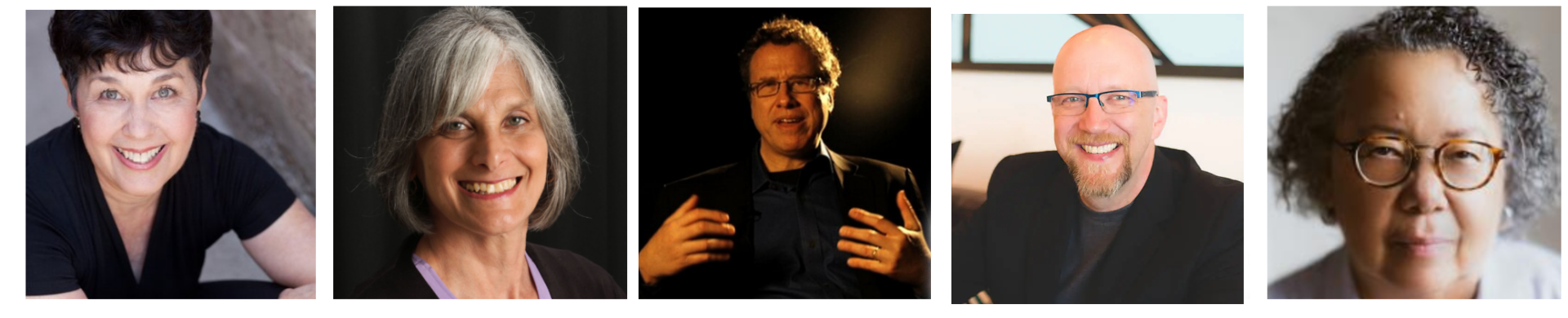 From left to right: Beverly Gray (moderator); Marcia Biederman, Danny Fingeroth, Simon Read, and Barbara D. Savage (panelists).
By Sara Fitzgerald
Four experienced biographers provided frank reports about their writing careers during a lively conference panel titled “Biographers’ Survival Tips.” Moderator Beverly Gray, author of a best-selling biography of her former boss, Roger Corman, guided her panelists through a discussion of their financial challenges, time management approaches, and career strategies.
Responding to her own question of how to make a living as a biographer, Gray quipped that it helped to “marry the right person.” Marcia Biederman, author most recently of The Disquieting Death of Emma Gill, described how she started off as a journalist and novelist but switched to biography as she neared retirement. Biederman explained that her job as a New York public school teacher enabled her to receive a pension and other retirement benefits that helped to support her writing. Biederman noted that she writes 75,000-word “low-rent biographies” of unknown people for which she receives small advances. She joked that unlike best-selling biographer Robert Caro, “I turn every other page.”
Barbara D. Savage, an award-winning biographer and author of Merze Tate: The Global Odyssey of a Black Woman Scholar, acknowledged that she continues to earn a living by working as a history professor at the University of Pennsylvania. Savage said it was a challenge to balance the demands of teaching with her writing life; a research grant had helped ease the financial challenges. Savage said that because all of her books had been published by academic presses, she was “very well trained on low expectations.”
Danny Fingeroth described how he had transitioned from working in the comics industry before becoming a biographer, first of Stan Lee and, more recently, of Jack Ruby. As a full-time freelancer, he “hustled” to earn a living and build his personal brand. That work now includes speaking engagements, one of which, he noted, had earned him a $15,000 fee. Fingeroth said that it was both “a luxury and a curse” not to have a “day job.” He said he had to focus on biographical subjects who were well known.
Simon Read, the author of 10 works of history and biography, including a soon-to-be-published book on famous Scotland Yard murder cases, said he had always had a “day job” to support his writing career. Starting off as a journalist and single, he now works in corporate communications and struggles to make time for his writing amid his job and family demands. Read said that while he had had no major bestsellers, several of his books had been optioned for film deals and that he had earned regular checks when the options were renewed.
All of the authors viewed time as a valuable commodity and described their strategies for managing it. Biederman said she prepared an outline and then followed it. Her career as a journalist had helped, she said, because she was used to writing fast and on deadline. She has “templates” in her head, much like those used by artificial intelligence. Savage noted that she teaches graduate students how to manage their time to complete their dissertations and tries to apply the same skills to her own work. Savage said she always tried to be “doing something” on her projects, even if it was not actual writing.
Read said that he had tried to achieve a daily word-count goal when he was single and starting out. But now that he had more responsibilities, he felt that was a “terrible” thing, because he would get depressed when he didn’t reach it. Although he tries to set aside an hour a day to write, he also practices “hit-and-run writing,” returning to his computer whenever an idea comes to mind. At the end of the day, he’s often surprised by how much he has written.
Fingeroth said that while time management is important, having space to write may be even more important. He said he has always tried to create a space away from his home, which helps him view his writing as his “day job.” Read said he had always been able to carve out a space in his home, but he had to be careful that his wife didn’t view herself as a “writer’s widow.”
The panelists agreed that as biographers, they had learned to find satisfaction in things other than money. “Keep your expectations grounded and you’ll have more joy,” Read advised. “Take pride in the fact that you have an idea that you’re passionate about.” And take pride, he concluded, in whatever steps you have taken toward accomplishing your idea.
Sara Fitzgerald is the author of The Silenced Muse: Emily Hale, T. S. Eliot, and the Role of a Lifetime, which will be published by Rowman & Littlefield Publishers in September 2024. Learn more here.
Panel Recap: “Melding Science and Biography”
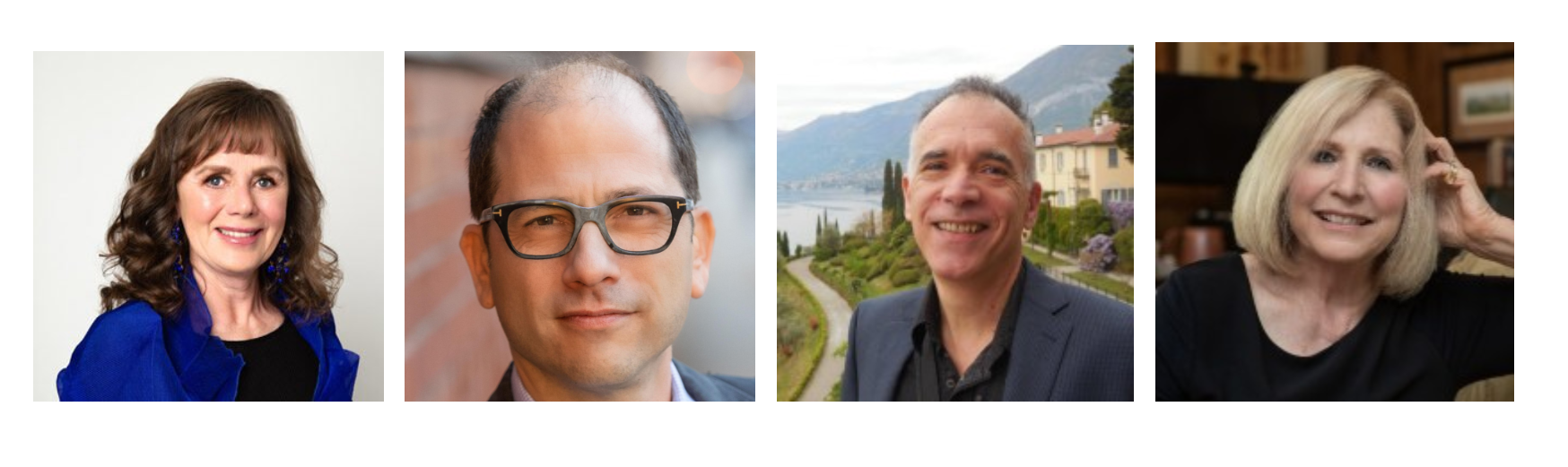 From left to right: Gabriella Kelly-Davies (moderator); Patchen Barss, Kenneth Miller, and Karen Torghele (panelists).
By Elizabeth Schott
In the “Melding Science and Biography” panel, science journalist and author Patchen Barss offered these words of encouragement to biographers tackling subjects in the sciences: “You don’t have to be an academic to write about your subject. If academics treat you like you do, that’s their problem, not yours.” Writing the biography of British mathematical physicist Roger Penrose gave Barss lots of opportunities to test this theory.
Barss was responding to moderator Gabriella Kelly-Davies’s question of how biographers become knowledgeable in the complex technical information that forms the backbone of their stories. He described his process for identifying experts and becoming their students, beginning with reading the popular press—Scientific American and Nautilus, for example. From there, he interviewed historically marginalized academics through resources such as 500 Women Scientists to get “past the crusty old white guys to get a more complete handle on the ideas being discussed.” All three panelists interviewed brilliant scientists and mathematicians, which forced them—critically—to go over something again and again until they understood.
Karen Torghele offered the following tips for gaining expertise in a subject area (in her case, Albert Sabin and polio): “People love to explain the field they love. It’s important to know the terminology, so that when they’re explaining something to you, you understand enough to follow up with an intelligent question.” Torghele gained some of her basic expertise through illustrated children’s books from publishers like National Geographic. A former epidemiologist at the CDC, she explained that the CDC website is a gold mine for fact sheets on diseases and disasters that can either inform the narrative of your story or may have affected your subject’s life. These are written at the fifth-grade level and provide references you can count on. Another resource is the Health and Human Services directory of people who work in these branches of government. When Kelly-Davies asked how Torghele mastered the complex terminology, she advised asking the person who is explaining it to you to “spell it out so the transcriptionist can get it right.”
Kenneth Miller recalled the serendipity (and importance) of finding a mentor for his work on sleep science at a national science writers conference. This person guided him to other sources, read his manuscript, and suggested what he should read. His “journey of reading” started with following the trail of citations in the only “dense tome” ever written on sleep science, which in turn led to archives and to people whom he could interview.
The panelists all agreed that memories—including those in memoirs—may not be 100% factually accurate, but they can be used judiciously. “Interviews often consist of a lot of childhood memories,” Barss said, “and it is valuable to know how people remember things as if they really happened. Tell that story as a memory. It has to do with how [the subject] sees [themselves] now.”
Scientists are explainers, but biographers must write vivid scenes and utilize literary devices and lyrical structures to make science human and propel readers through to the end. Miller reminded the audience to “use all the tricks fiction writers use while taking care to introduce no fiction whatsoever.” He employed the “hero’s journey” structure of wandering, getting lost, overcoming obstacles, and eventually returning home with the transformative treasure. For example, in writing her biography of Sabin, Torghele decided not to end with his death but rather with him delivering his last lecture from a hospital gurney (which she found in a YouTube video!), which cinematically revealed far more to the reader than a deathbed scene.
Humanizing scientists—and their areas of study—can be tricky, but the panelists succeeded in doing so. Miller bridged the work of his four scientists to the current obsession with sleep tracking and CPAP machines, as well as with the impact of parenting and school schedules on teen sleep patterns—or is it the other way around? Barss, knowing that quantum physics tends to be written about as weird and off-putting, decided to integrate Penrose’s story with the science story. He posited that on the day Penrose was born in 1938, he was made of stardust, a baby either brand new or as old as time. Barss went on to write about the connections between Penrose’s work and this universal story throughout the book. Torghele, knowing that many readers are too young to know about polio, told the story of a modern-day lab worker who accidentally becomes infected with the virus. She described what the virus was doing inside and outside of the woman, personifying the virus, and ending with the woman’s life as a paraplegic.
No background in science is needed to understand any of these very human stories written by these skilled biographers.
Liz Schott is writing a biography of 20th-century weaver Dorothy Liebes. She also mentors new education leaders and owns a whale watching business with her husband of 37 years. They have two adult children, and live in Northern California with their English Shepherd rescue, Marshall.
|
|
|
|
MEMBER INTERVIEW
Six Questions with Eric Nishimoto
What is your current project and at what stage is it?
I’m working on a hybrid memoir/biography about my Uncle Art, who fought in World War II in the segregated, all-Japanese U.S. Army regiment that is the most decorated unit in American history and whose ranks were replenished three and a half times in just the one year they fought in Europe. The Nisei (second-generation American Japanese) fought like they did just to prove to America that they were as patriotic and as good citizens as any, even in the face of intense bigotry and the incarceration of over 110,000 American Japanese (70% of whom were American citizens) during the war. Their battle history is legendary, which is why over 40 books, many documentaries, and two feature films (one of which won an Academy Award in 1951) tell their incredible war stories. Yet that isn’t what my uncle wanted me to learn when he finally agreed to let me write about him and the 442nd RCT. To him and the other Nisei, their wartime victories and sacrifices were simply a citizen’s duty to the greatest country in the world, regardless of how many Americans treated them.
So, this project is like Tuesdays with Morrie with Unbroken mixed together. I’ve been blessed to have a number of storied writers and authors speak into my book, especially James McGrath Morris, George Getschow, and the late Jim Hornfischer. My agent is currently shopping the book while I continue working away at it. Eager? Anxious? Absolutely!
What have been your most satisfying moments as a biographer?
I was asked to write a book about Collin McKinney, one of Texas’ founding fathers, to celebrate his 250th birthday. The amazing thing about Texas Maker was that it was the first book written about him. McKinney was beloved in his time, as famous as his peers like David Crockett, Sam Houston, William Travis, and Jim Bowie, among others. He helped draft the Texas Declaration of Independence and the Texas Constitution. There are so many amazing facts about McKinney that had never been shared that I was honored to bring to light. I was also privileged to have three historians share their many years of extensive research on McKinney and Texas’ fight for independence from Mexico with me, which made writing the book a joy (and made me feel like David McCullough!).
When I spoke about the book and McKinney during his birthday celebrations, it was a thrill to have hundreds of his descendants attend from all over the country. Their presence and gratitude were overwhelming.
But the most satisfying moments as a still-fledgling biographer and writer are to be welcomed into the circles of some of today’s most brilliant authors through BIO and writers’ workshops, conferences, and speaking engagements across the country.
What have been your most frustrating moments?
My most recent published piece is an essay in a collection celebrating the late Larry McMurtry: Pastures of the Empty Page: Fellow Writers on the Life and Legacy of Larry McMurtry (University of Texas Press, 2023). As pleased as I was to be included in the collection, the beautiful (in my eyes, anyway) and already edited essay I submitted was carved up and the most lyrical prose excised! (Darn academic editors!)
I can handle extensive editing, but the heart of the piece was gone and I couldn’t convince them to put any of it back. Ah well . . .
Regarding my current book project, my subject (Uncle Art) was a brick wall for several years. World War II veterans rarely share their wartime experiences to “outsiders” and Nisei never talk about themselves, their accomplishments, or their feelings. It’s part of that steadfast Japanese humility that made it tough to get anything of substance out of my uncle. Such granite-like modesty also colored hundreds of hours of oral history recordings and memoirs of many 442nd RCT veterans.
Even bribes of delicious Hawaiian and Japanese food didn’t wrest much out of him. But once he realized that he could share his war stories as a way to illustrate what was truly in his heart—what the war taught him about the responsibilities and duty of every American citizen—he began to open up.
But as frustrating as his reticence about what his battle mates accomplished in World War II, I have to admit that it was also quite fun to try and break him. And I could tell that he was enjoying himself, too. Even during one relentless, nonstop 12-hour session, in which I kept the pressure on him throughout—don’t worry, the old man was as tough as they come!
One research/marketing/attitudinal tip to share?
Something I stress to my students and have even shared with seasoned interviewers and researchers is to listen—to be open and attentive to discovering where your interviews/research take you, especially if it’s not where you were expecting—and to listen! Did I stress listening enough?
If you weren’t a biographer, what dream profession would you be in, and why?
Power forward for the L.A. Lakers. Actually, being a writer is a dream fulfilled. And as I’m also an illustrator, working on a couple of illustrated books for children and adults is also quite amazing. Though as a sometimes musician, being a music professional would be quite cool, too. That is, when I’m not racing in Formula One! Mom has always complained that I can’t make up my mind about what I want to be . . .
What genre, besides biography, do you read for pleasure and who are some of your favorite writers?
I love literary nonfiction: John Hersey (Hiroshima is possibly my most favorite book in any genre), along with Hampton Sides and James Scott, among others. And I love fiction, both adult and children’s: Kazuo Ishiguro is my fav, as is Tim O’Brien (for his masterful Vietnam War novels), Larry McMurtry, and several one-book wonders (Harper Lee’s To Kill a Mockingbird, Charles Portis’s True Grit, Thomas Berger’s Little Big Man, to name a few). My children’s fiction favs have beautiful text and illustrations: A. A. Milne, Michael Bond (the Paddington books), Maurice Sendak, Graham Oakley (Church Cat and Mouse books), and Dr. Seuss (what command of language!). And poetry, especially haiku: Issa is my all-time favorite and the genre-benders (fiction? nonfiction? both?) like Luis Alberto Urrea.
Learn more about Eric Nishimoto here.
|
|
|
|
BIO PODCAST
Judith Tick and Barbara D. Savage
Recently on the BIO Podcast, Sonja Williams interviewed Judith Tick, author of Becoming Ella Fitzgerald: The Jazz Singer Who Transformed American Song (W. W. Norton & Co., 2024), and A’Lelia Bundles interviewed Barbara D. Savage, author of Merze Tate: The Global Odyssey of a Black Woman Scholar (Yale University Press, 2023). New episodes are released every Friday here.
|
|
|
|
PITCH YOUR ARTICLE
Would you like to see your work featured in The Biographer’s Craft? Simply fill out this form to submit your pitch for consideration. Remember that features should be focused on the art and craft of biography, should not be promotional, and must be written by BIO members. Submit your pitch here.
|
|
|
|
KEEP YOUR INFO CURRENT
Making a move or just changed your email? We ask BIO members to keep their contact information up to date, so we and other members know where to find you. Update your information in the Member Area of the BIO website.
|
|
|
MEMBERSHIP UP FOR RENEWAL?
Please respond promptly to your membership renewal notice. As a nonprofit organization, BIO depends on members’ dues to fund our annual conference, the publication of this newsletter, and the other work we do to support biographers around the world.
|
|
|
|
|
|
BIO BOARD OF DIRECTORS
Steve Paul, President
Heather Clark, Vice President
Marc Leepson, Treasurer
Kathleen Stone, Secretary
Michael Gately, Executive Director
Kai Bird
Natalie Dykstra
Gretchen Holbrook Gerzina
Carla Kaplan
Kitty Kelley
Diane Kiesel
Sarah S. Kilborne
Linda Leavell
Heath Lee
Susan Page
Tamara Payne
Barbara Lehman Smith
Will Swift
Eric K. Washington
Sonja D. Williams
ADVISORY COUNCIL
Debby Applegate, Chair • Taylor Branch • A’Lelia Bundles • Robert Caro • Ron Chernow • Tim Duggan • John A. Farrell • Caroline Fraser • Irwin Gellman • Michael Holroyd • Peniel Joseph • Hermione Lee • David Levering Lewis • Andrew Lownie • Megan Marshall • John Matteson • Jon Meacham • Marion Meade • Candice Millard • James McGrath Morris • Andrew Morton • Arnold Rampersad • Hans Renders • Stacy Schiff • Gayfryd Steinberg • T. J. Stiles • Rachel Swarns • Will Swift • William Taubman • Claire Tomalin
|
|
|
THE BIOGRAPHER'S CRAFT
Editor
Jared Stearns
Associate Editor
Melanie R. Meadors
Consulting Editor
James McGrath Morris
Copy Editor
James Bradley
|
|
|
|