|
March 2022 | Volume 17 | Number 1
|

FROM THE EDITOR
While the world is still reeling from the war, the pandemic, and many other difficulties great and small, I have been picking up on at least a slight vibrational shift from The Biographer’s Craft inbox: Members are going places, literally, and feeling good about it. In the past few weeks, a higher number of members have reported going on research trips than at any point since I assumed this role, as well as hosting in-person book events. That’s not to say these members report being entirely carefree, but the new, positive undercurrent has been personally inspiring. May it only increase from here.
For our first 2022 BIO “Conference Preview” feature, Kate Buford explains how her “Celebrity Biography” panel will explore the issue of trust when writing about the famous, as well as the unexpected and advantageous paths research can take. Dona Munker’s report on the most recent Dorothy O. Helly Works-in-Progress Lecture features valuable tips for writers who are writing about a subject they cannot access personally. And Kathleen Stone, who completed our member interview this month, shares generous and helpful tips about book marketing and promotion. (I’ll let the exclusive photos from one BIO member who recently researched in Havana speak for themselves.)
Also, it’s not too late for news to be included in the April edition of the BIO Insider. Please reply directly to this message or click this link to send along news and notes: editortbc@biographersinternational.org. If you’ve taken a research trip lately, or you plan to, I’d like to hear about it.
Sincerely,
Holly
|
|
|
|
|
Conference Preview: “Celebrity Biography” with Kate Buford
Kate Buford is the author of Native Son: The Life and Sporting Legend of Jim Thorpe (Knopf, 2010) and Burt Lancaster: An American Life (Knopf, 2000). On Sunday, May 15, she’ll be the moderator of the “Celebrity Biography” panel at the 13th annual BIO Conference, in which she will lead a conversation with Kitty Kelley (author of His Way: An Unauthorized Biography of Frank Sinatra, Random House, 1986, among many others), Alan K. Rode (author of Michael Curtiz: A Life in Film, University Press of Kentucky, 2021), and Steven C. Smith (author of Max Steiner: The Epic Life of Hollywood’s Most Influential Composer, Oxford University Press, 2020).
Buford’s goal for the panel definitely scratches beneath the glittery surface of celebrity. She hopes the session inspires attendees “to be open to unexpected detours [in research] that take us off to places we didn’t expect. And, thus, to end up with a better understanding of what celebrity means and what these fine biographers have to teach us.”
Buford has assembled an eclectic group of writers who are all scrupulous practitioners of the art and craft of biography and are highly regarded in the field. She describes her panelists thusly: “Kitty Kelley needs no introduction and was writing tough—sometimes shocking, for the more traditional time when she started—biographies of famous and powerful men and women such as Sinatra, Jackie Onassis, Nancy Regan, the Bush family, and more. She can address, among several issues, the loaded one of ‘unauthorized biography’ and if that really means anything anymore. Alan Rode … knows more about Hollywood history and the people who made the movies—especially film noir in the late 1940s—than just about anyone. Steven Smith, four-time Emmy-nominated journalist and producer of more than 200 documentaries about music and film also brings a knowledge of music through his two biographies of legendary Hollywood composers, Bernard Herrmann and Max Steiner.” Buford rounds out the mix by providing valuable perspective on sports celebrities vis-à-vis her biography of Thorpe.
What can attendees expect to come away with? “They may learn some guidelines of the care and feeding of very famous, protected people who are, not very deep down, just human beings like ourselves,” Buford explains. “We will discuss the idea of trust: how to gain the trust of celebrities and to trust them in turn.” One of the challenges of a panel like this, she added, is keeping the “war stories” to a minimum. She elaborated:
“As moderator, I want to explore the terrific perspectives and experiences each of these panelists bring to this BIO panel. What we will try to do is find what commonalities there are among all the celebrities we have written about. And, what the differences reveal about our culture and the genre of biography. I’d like to end the panel with some kind of idea of what ‘good’ celebrity is. Can we grade celebrities from best to worst? Does such a judgment affect writing a biography of them? If so, how? Those are loaded questions, but worth raising, I think.”
The “Celebrity Biography” panel will take place on Sunday, May 15, from 3:00 PM–4:00 PM EDT during the 12th Annual BIO Conference. For more information about one of the panelists, Kitty Kelley, see this month’s “Amanuensis” feature: a profile of Kelley’s life as a biographer that first appeared in The Hollywood Reporter.
|
|
|
|
CORRESPONDENTS' DESK
Phenom in Pigtails: Tennis Great Maureen “Little Mo” Connolly
by Dona Munker, Correspondent, New York
In 1944, at the age of 10, Maureen Connolly announced that her destiny was becoming the number one tennis player in the world. In 1945, when she was 11, a sportswriter dubbed her “Little Mo” for the forehand and backhand that reminded him of the firepower of the U.S.S. Missouri (a.k.a. “Big Mo”). And, in 1953, when she was 18, she won all four major titles: Wimbledon and the United States, French and Australian Championships (she only dropped one set). She remains one of only five tennis players in history, as well as the youngest person and the only American woman, to have won the calendar Grand Slam.
Today, Maureen Connolly is still the only player in history ever to have won a title without losing a set in all four major championships. Sally Cook, a former Associated Press journalist and the award-winning author of eight books on sports for adults and children, is telling her story in Unmatched: The Life of Maureen (Little Mo) Connolly, American Tennis Legend, which she expects to be published next year by Arbitrary Press. At the spring 2022 Dorothy O. Helly Works-in-Progress Lecture, presented by the Women Writing Women’s Lives Seminar and co-sponsored by the Center for the Study of Women and Society of the City University of New York Graduate Center, Cook described “Little Mo” as having brought a prowess and a charisma to tennis not seen since the great French players of the 1930s. “No one had such a profound effect on tennis in such a short time.”
Cook was drawn to Connolly’s story because it resonated with her own. “I, too,” she told her
viewers, “was that little girl who eschewed dolls, preferring to join in pick-up games with the neighborhood boys…[who] eventually didn’t want me around.” Cook swam competitively but never intended to play professional tennis (she describes herself as “a mediocre tennis player but an avid fan”). Rather, she was attracted to Maureen’s story “because from an early age she challenged female stereotypes.” Cook’s admiration grew as her research progressed and she realized that Maureen had had few childhood role models and little means of getting the support children need to become champion athletes. Yet once she was smitten, Cook said, she
worked to become the champion she envisioned with such relentless dedication—at one point even taking tap dancing to improve her footwork—that she soon had young male players “fighting among themselves to play against this dynamo.” (The dynamo, Cook added, never bothered to play more than once with any boy she had already beaten.)
The career of the girl whom the press loved to call a “killer in pigtails” had a dark side. At the onset of adolescence, Maureen, who was the product of a broken home, fell under the spell of Eleanor Tennant, America’s first woman tennis professional and a renowned coach. Tennant was a brilliant teacher but, said Cook, a “dangerously domineering” one who taught Maureen that the only way to win was to cultivate a consuming hatred of her opponents and subordinate her life totally to the goal of winning. Fortunately, Maureen’s toughness was equal to her coach’s. In 1952, “pushed to the brink” by Tennant’s tyrannizing behavior, she fired Tennant in the middle of a press conference. The following year, having escaped a type of teacher-pupil relationship that would now be called abusive (and that has recently been generating growing concern in the world of sports), Connolly hired a kind and humane coach whose wife eventually convinced her that she could not only enjoy life apart from tennis but didn’t have to hate and fear her opponents to win.
For Cook, her the fascination with Connolly’s story lies not so much in the scores she racked up on her way to greatness but in the qualities that made her great: her concentration, her passionate work ethic, and above all “her extraordinary drive to win.” Tragically, in 1954, only two weeks after winning her third Wimbledon title, she suffered a horseback-riding accident that severed her lower right calf and in which she almost lost her life. Despite characteristically heroic efforts to recover the professional use of her leg, at the age of 20, her career as a pro tennis player was over. But thanks to her natural resilience, her extraordinary work ethic, and her phenomenal ability to concentrate, for another 15 years—until her untimely death at the age of 34 from ovarian cancer—she “went right ahead” with life, marrying and giving birth to two daughters; working on a college degree; helping her husband Norman Brinker, a restaurateur, develop ideas that eventually led to his being known as “the father of casual dining”; serving as a sports journalist and TV commentator; and, above all, devoting much of her remarkable energy to encouraging and supporting rising young women tennis players like Billie Jean King.
Asked what it’s like to write about a subject who inspires her but whom she cannot talk to, Cook replied that she has been lucky to have access not only to many contemporaneous articles and interviews but to Forehand Drive, “an unflinchingly honest” autobiography Connolly herself published in 1957. In it, Little Mo writes about life on the courts ( “a jungle”) and refers to the burden of “being the best” as her “dark destiny.” Cook has also been able to conduct interviews with relatives, including a first cousin who was close to Maureen, and with Connolly’s daughters, one of whom wrote a memoir about her mother’s final illness. In addition, she has been able to interview many still-living people in the sports world who
knew Connolly personally, including some who played with or against her.
Unmatched is Cook’s first biography, and she admitted to being surprised at the amount of “layering, the cross-checking [required] to get it right.” COVID-19 in particular made life difficult during the two years she needed to corroborate information. As for being unable to talk to her subject directly, however, she replied, “The more research I do, the more fascinated I am. I’ve learned so much from her. I often ask myself, ‘What would Maureen do?’”
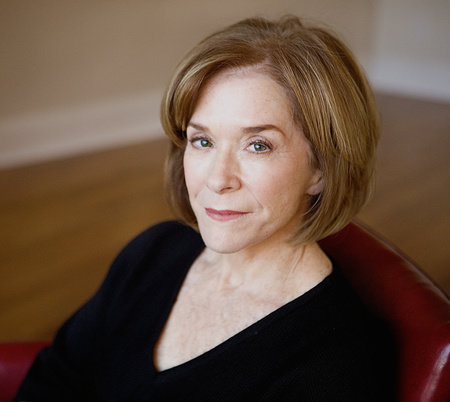
Dona Munker is the writer and co-author of Daughter of Persia: A Woman’s Journey from Her Father’s Harem through the Islamic Revolution. She is working on a book about a suffragist and poet, Sara Bard Field, and her “free-love” affair with the civil libertarian and poet C. E. S. Wood. Her blog, “Stalking the Elephant,” which is about how biographers imagine and tell other people’s stories, is currently inactive. She hopes to return to it eventually.
|
|
|
|
MEMBER INTERVIEW
6 Questions with Kathleen Stone
Who is your favorite biographer or what is your favorite biography?
When I began reading biography as a young adult, after a long stretch of fiction in high school and college, I picked up the first two volumes of William Manchester’s The Last Lion. I was desperate for Manchester to live long enough to complete the third volume, but the fervor of my desire was no match for fate. More recently, David McCullough’s Truman, Ron Chernow’s Grant, and Dorothy Wickenden’s The Agitators have been favorites. I guess it’s obvious that I like to learn history through lives.
As for learning about art, another interest of mine, Giorgio Vasari’s The Lives of the Most Excellent Painters, Sculptors and Architects is a Renaissance treasure. It certainly would not meet current standards of scholarship, but it is enjoyable and even the gossip is illuminating. A recent book about women’s self-portraiture, The Mirror and the Palette by Jennifer Higgie, is told through artists’ lives. It is both scholarly and passionate.
What have been your most satisfying moments as a biographer?
All of my moments as a biographer have been in connection with my recently released book, They Called Us Girls: Stores of Female Ambition from Suffrage to Mad Men (Cynren Press). It’s a collective biography of seven women who began careers in male-dominated professions in the mid-20th century. I interviewed all the women when they were in their 80s and 90s, and those interviews are the backbone of my book. But I also talked to family members and friends of the women, and some of the most satisfying moments came from those conversations. People were willing to share incredibly valuable memories and insights. Sometimes, I was reassured that I was on the right track in my interpretation of information I had collected. Other times, those conversations gave me a new perspective. Almost always I learned details, even small things, that enhanced the picture I was trying to paint with words. Connecting with my subjects’ families and close friends was greatly satisfying.
What have been your most frustrating moments?
Trying to find the right sequence for the book’s chapters was frustrating. The women in the book are essentially contemporaries, so a chronological approach was not useful for situating or distinguishing them—there was too much overlap. A thematic approach had the same problem. My goal was to discover what fueled these women’s professional ambitions. Each life was unique, of course, but many factors such as family, education, and mentors were similar from one to the next. So, as with chronology, themes did not effectively differentiate among the women. I made lists and charts and rewrote sections to try to find a meaningful arrangement, but it all felt mushy.
Finally, working with a developmental editor, I realized that the individual women’s experiences illustrated a larger historical narrative: how opportunities for women overall evolved in the mid-20th century. Once that lightbulb went on, I was able to see how each life intersected with that larger theme. But getting to that point was preceded by a fair amount of frustration.
One research/marketing/attitudinal tip to share?
My book launched March 1, so marketing is top of mind for me right now. I have had to be open to strategies for connecting with readers, including some that are entirely new to me. Six months ago, I did not know what a bookstagrammer was. Now, every day this month, a different bookstagrammer is highlighting my book on what is called a virtual book tour. These people are influencers with huge followings on social media and my book has gotten more exposure through them than through anything I could have done myself. So my advice is to get expert advice and learn about and be willing to try strategies, even if they are new to you, that will help get the book you have written out into the world.
What genre, besides biography, do you read for pleasure and who are some of your favorite writers?
Typically, I read novels. I often am on the lookout for those that experiment with form and structure, and I like books that pose questions for me to mull over. Recently, I’ve enjoyed Lauren Groff, Rachel Cusk, and Claire Messud. In Boston I co-host a literary salon, and in that venue I have had the pleasure of hearing writers who are somewhat less well-known, such as Rachel Kadish and Mira T. Lee, talk about their books. And John le Carré is one writer whose books I could read over and over.
If you weren’t a biographer, what dream profession would you be in, and why?
I would say law, except I’ve already done that. For more than 30 years I practiced law, with a focus on commercial litigation. Eventually, I wanted to try something different and I turned to writing. That might seem like a natural evolution, but legal writing is very different from writing biography or anything else.
If I were going to switch gears once more and try something entirely new, I would be an art curator in a museum. That’s what I thought I would do when I was in college and majoring in art history. I abandoned that path in favor of law school, but I can fantasize about going back and choosing the road not taken.
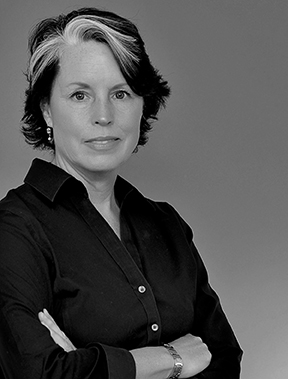
Kathleen Stone knows something about female ambition. As a lawyer, she was a law clerk to a federal judge, a litigation partner in a law firm, and senior counsel at a financial institution. She also taught seminars on American law in six foreign countries, including as a Fulbright Senior Specialist. Kathleen’s work has been published in Ploughshares, Arts Fuse, Los Angeles Review of Books, Timberline Review, and The Writer’s Chronicle. She holds graduate degrees from Boston University School of Law and the Bennington College Writing Seminars and lives in Boston with her husband. You can visit her website here.
|
|
|
|
WRITERS AT WORK
Carol Ascher
The “Writers At Work” section was borne out of the writerly condition—exacerbated by the pandemic—of being very much at home. As many BIO members are now reporting embarking on research trips for the first time in two years, this month’s feature is dedicated to one such member who took an extraordinary research trip: Carol Ascher shows and tells us about her work in Havana.
|
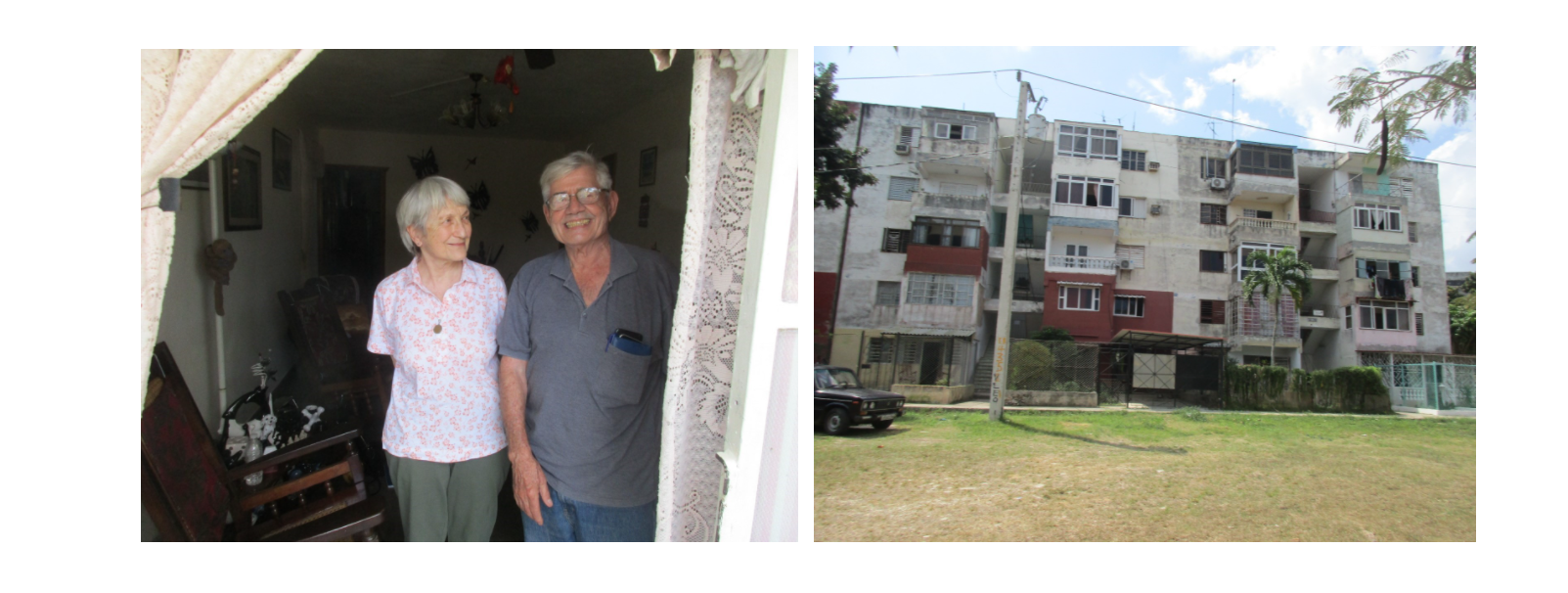
Ascher says, “With the early spring thaw bringing along an apparent thaw in the pandemic, I’m finally off to Havana to conduct interviews and other research for my biography of Mary Todd (1941–2016). The daughter of Laurence Todd, a correspondent for TASS, who was followed by the FBI throughout her childhood and youth, she was 22 when evidence suggested that she, too, was being surveilled. Despairing of a normal life in the U.S., she left for Cuba.
Despite suffering personal tragedy in her new homeland, Mary Todd became one of Cuba’s foremost translators, writing subtitles for Cuban films, and translating articles and some 20 books by Cuban scholars into English. A loyal Cuban, she also traveled widely as an interpreter with Cuban ligations, always bringing home to her Havana friends and neighbors souvenirs of exotic non-aligned countries, including Iran and North Korea.
To move my bio forward during the two-year pandemic, I have worked closely with a Cuban research assistant, Victor Pina, who has immeasurably enriched my knowledge of both Mary and Havana, and who eased my trip. Nevertheless, the pandemic, on top of a 60-year U.S. boycott and missteps by the island’s socialist leadership, has left Cuba in severe material straits, and each day brings new requests for everything from aspirin to soap and shampoo. Told about long food lines, I packed dehydrated meals, as if for a long backpacking trip!”
Please share pictures of where you work with us with the subject line as “Writers At Work,” so we can include them in future issues.
|
|
|
|
AMANUENSIS
“Kitty Kelley, Queen of the Unauthorized Biography, Spills Her Own Secrets”
by Seth Abramovitch
(from The Hollywood Reporter)
There was, not that long ago, a name whose mere invocation could strike terror in the hearts of the most powerful figures in politics and entertainment.
That name was Kitty Kelley.
If it’s unfamiliar to you, ask your mother, who likely is in possession of one or more of Kelley’s best-selling biographies—exhaustive tomes that peer unflinchingly (and, many have claimed, nonfactually) into the personal lives of the most famous people on the planet.
“I’m afraid I’ve earned it,” sighs Kelley, 79, of her reputation as the undisputed Queen of the Unauthorized Biography. “And I wave the banner. I do. ‘Unauthorized’ does not mean untrue. It just means I went ahead without your permission.”
But what of her methodology? Kelley insists she never sets out to write unauthorized biographies. Since Jackie Oh!, she has always begun her research by asking her subjects to participate, often multiple times. She is invariably turned down, then continues about the task anyway. She’s also known to lean toward blind sourcing and rely on notes, plus tapes and photographs, to back up the hundreds of interviews that go into every book. FULL STORY
Amanuensis: A person whose employment is to write what another dictates, or to copy what another has written. Source: Webster’s Revised Unabridged Dictionary (1913).
|
|
|
|
KEEP YOUR INFO CURRENT
Making a move or just changed your email? We ask BIO members to keep their contact information up to date, so we and other members know where to find you. Update your information in the Member Area of the BIO website.
|
|
|
MEMBERSHIP UP FOR RENEWAL?
Please respond promptly to your membership renewal notice. As a nonprofit organization, BIO depends on members’ dues to fund our annual conference, the publication of this newsletter, and the other work we do to support biographers around the world.
|
|
|
|
|
|
REGISTER
For the 2022 BIO Conference
The 2022 BIO Conference, cosponsored with the Leon Levy Center for Biography, will take place online May 13-15. Registration is NOW OPEN on Eventbrite. Detailed conference information is available HERE.
|
|
For the “Reading Biography Like a Writer” Event
The next session in our free online workshop series “How to Read Biographies Like a Writer” has been scheduled for March 30 (7 p.m. Eastern/6 p.m. Central). The hourlong conversation will feature an esteemed publishing veteran, Gerald Howard, and his intriguing selection: the late Patricia Bosworth’s Montgomery Clift, which he describes as “the best celebrity biography (so-called) of the past fifty years” and a model for all “biographers who have to deal with sad and scandalous aspects of public figures, especially in the arts.” Those who’d like to read the book ahead of time can readily find copies available. REGISTER HERE
|
|
|
|
BIO BOARD OF DIRECTORS
Linda Leavell, President
Sarah S. Kilborne, Vice President
Marc Leepson, Treasurer
Steve Paul, Secretary
Kai Bird
Heather Clark
Natalie Dykstra
Gretchen Holbrook Gerzina
Anne Heller
Carla Kaplan
Kitty Kelley
Anne Boyd Rioux
Holly Van Leuven
Eric K. Washington
Sonja D. Williams
ADVISORY COUNCIL
Debby Applegate, Chair • Taylor Branch • Robert Caro • Ron Chernow • Tim Duggan • John A. Farrell • Irwin Gellman • Michael Holroyd • Peniel Joseph • Hermione Lee • David Levering Lewis • Andrew Lownie • Megan Marshall • John Matteson • Jon Meacham • Marion Meade • Candice Millard • James McGrath Morris • Andrew Morton • Arnold Rampersad • Hans Renders • Stacy Schiff • Gayfryd Steinberg • T. J. Stiles • Will Swift • William Taubman • Claire Tomalin
|
|
|
|
|
THE BIOGRAPHER'S CRAFT
Editor
Jared Stearns
Associate Editor
Melanie R. Meadors
Consulting Editor
James McGrath Morris
Copy Editor
James Bradley
|
|
|
|