|
April 2026 | Volume 21 | Number 2
|
|
FROM THE EDITOR
Have you been listening to the BIO Podcast? The series “Four Paths, One Impossible Dream” has just concluded, and it offers an intimate look at how four biographers have forged their careers. You can find the links to the episodes below.
It’s almost conference time, but there is still time to register. You can take part in preconference roundtables, go on tours, and sign up for coaching sessions. There will also be panels on many aspects of the craft and business of biography. This is a great opportunity to meet your colleagues; there is something for everyone, no matter where you are in your career.
In this month’s TBC, June Graham tells the story of a serendipitous encounter involving this very newsletter! James Rhem discusses labels and the author’s lens. Is a biographer a flawed mouthpiece to dissect someone’s personal life? And Margena Christian talks about the sleuthing process in her work in her Six Questions interview.
Do you have an idea for an article about writing biography? Has something interesting happened to you in your writing life as a biographer that you’d like to share? If so, feel free to contact me. You can also help other members get to know you by taking part in our Six Questions column.
I hope you have a wonderful and productive spring!
Melanie R. Meadors
|
|
|
|
BIO RESOURCES
Can’t make it to the conference this year? BIO offers resources for members to use anywhere. Our Biography Lab is a virtual one-day conference that takes place in January, and you can check out previous events in the archives. You can also watch select panels from previous conferences, virtual workshops, and special events on our video library page. BIO also offers coaching to members who might be stuck or in need of some advice. You can access all of our members-only resources by logging on to our website.
|
|
|
|
|
MEMBER VOICES
Finding a Long-Lost Friend through Biography
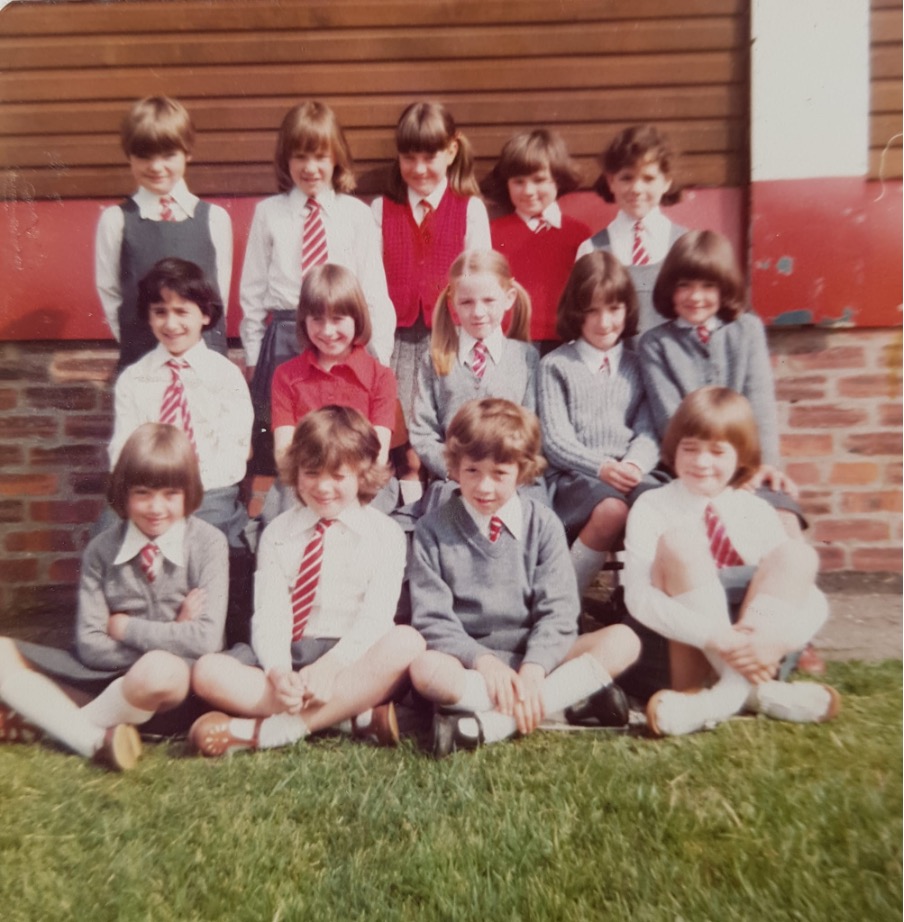 June and Alison in their third-grade class photo at Carolside Primary School outside Glasgow in 1985. June is bottom right and Alison is second row, middle.
By June Graham
An article in The Biographer’s Craft connected me with a childhood friend. An interview in the March issue was with another Scottish woman currently working on her first biography. As I had not, as yet, come across any other Scottish writers in the midst of writing biographies, I scrolled back up to the top of the article to get her name, thinking it would be good to get in touch.
The picture at the top showed a blonde-haired woman wearing a jaunty beret. The name underneath, Alison Kerr, jolted a memory of sitting at a scarred wooden desk beside a skinny girl with blonde hair and blue eyes. Alison was asking me in a whisper what the teacher had just scratched on the blackboard. In a low voice, I dictated the chalky lines that the teacher wrote on the board so my friend could write them in her jotter. We continued until the teacher reprimanded us for talking in class. That scene played out again and again until one day my friend Alison came into class wearing a pair of glasses that allowed her to read everything the teacher had written.
At the end of primary school, around age 11, Alison went to a high school in a different part of Glasgow. Almost ten years later, I met her on a traffic island in the middle of a busy shopping street in Clarkston, where our parents lived. Alison was studying film at Glasgow University, and I was studying physics and astronomy ninety miles away in the town of St Andrews on the east coast of Scotland.
With one of us pursuing a degree in the humanities and the other in science, it seemed unlikely our paths would cross again. As I grew older and these divisions seemed less important, I often wondered what happened to Alison and if I would even recognize her if I passed her at the Clarkston shops.
I looked at the photo in The Biographer’s Craft, trying to see the skinny girl I once knew. A Google search told me that Alison Kerr was a journalist working in Glasgow, with a particular interest in film; it might well be my schoolfriend.
I asked the BIO newsletter editors if they could pass along a message. A few days later, Alison wrote back. She did indeed remember the trouble we had got into at school and suggested we meet up after an upcoming trip to Lyon. I responded that I was reading A Woman of No Importance, a biography of the American spy Virginia Hall, who operated in Lyon during World War II. In another coincidence, it turned out that Alison was reading the same book.
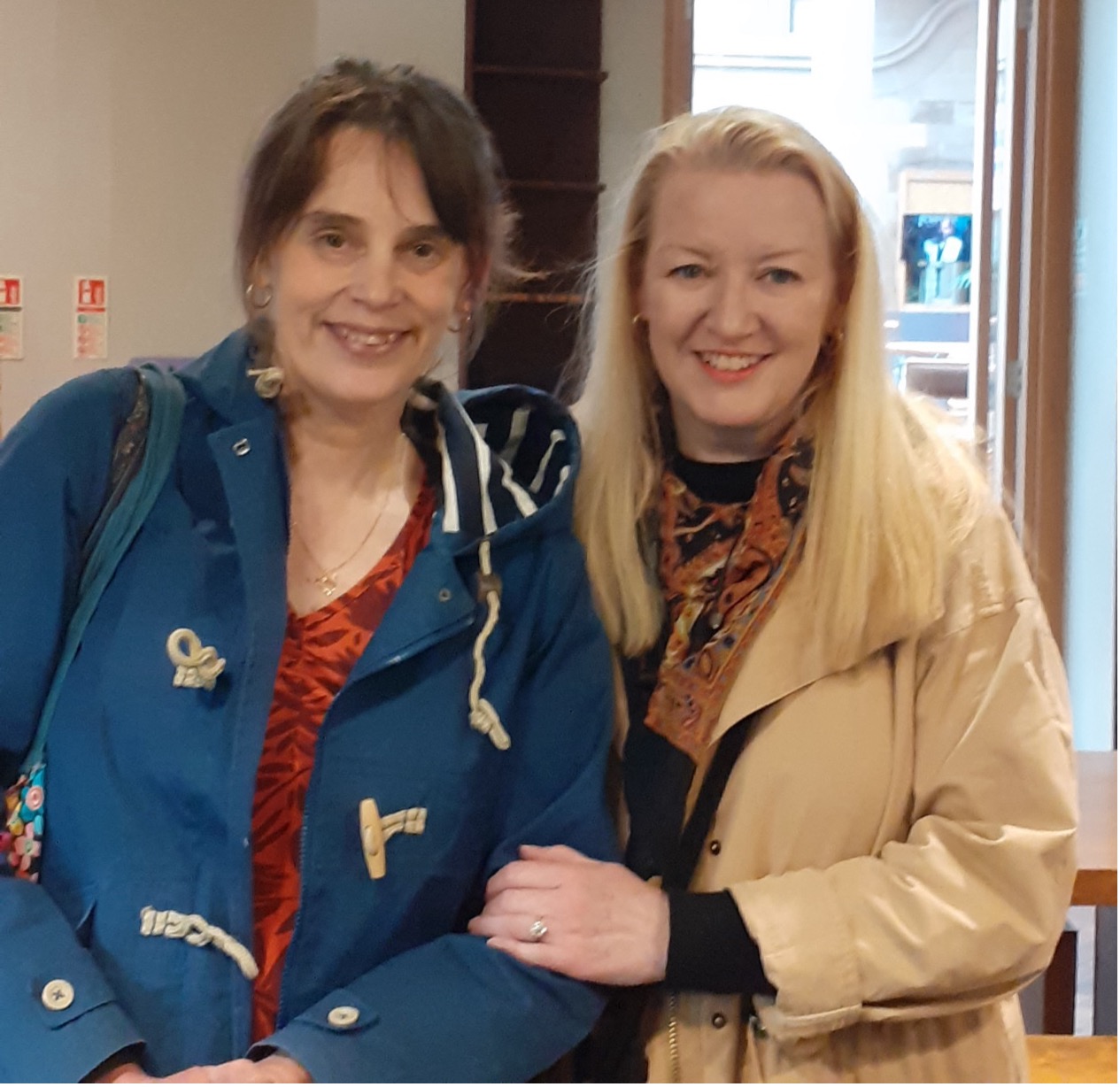 June (left) and Alison met up 40 years later in spring 2025.
A few weeks later, we met in a Glasgow café and talked for over three hours, not only about our school memories but also about researching and writing biography. Our subjects’ timelines overlapped. I am writing about the African American writer Vincent O. Carter (1924-1983), who grew up in Kansas City during the Jazz Age and spent the last thirty years of his life in Switzerland. During World War II, he was stationed briefly in Glasgow in the build-up to the D-Day invasion. Alison’s subject, Ella Logan (1913-1969), was born in Glasgow and emigrated to America, where she spent much of her life. Ella sang jazz, among other genres; it’s possible that the young Carter attended one of her performances to troops during the war years.
When we got back in touch, Alison and I had spent around six years on our projects. We approach biography from different perspectives. For Alison, it’s an extension of her journalism. Although I use the skills I learned as a research scientist, writing is a hobby that I’m trying to develop into a part-time career.
A first biography can feel like an act of faith as you pour time, energy, and resources into re-creating the life of someone who lived in a different time and place, hoping to convey your passion to readers. Alison and I were able to talk about the research we have done and the ideas for structure. It was good to talk to someone who understands what it’s like to strain your eyes staring into a microfilm reader searching for nuggets of information.
In the past year Alison and I have both experienced turmoil that has made writing difficult and at times impossible. We have kept in touch since our meeting in May. Neither of us knows how our biographies will pan out as we try to finish them and find interest from agents or publishers, but we have been able to encourage each other.
—
June Graham’s career in climate research took her to Bern, Switzerland, where she became fascinated by Vincent O. Carter, whose biography she has been working on over the past seven years. Since returning to Scotland, she has been involved in Gaelic language development and currently works at the University of Edinburgh on a Gaelic research project.
|
|
|
|
CRAFT CORNER
Labels and Lenses in Writing Biography
By James Rhem
Labels have their uses, but they can be dangerous in writing biography. At their best, labels give us essential knowledge. We want to know if something is poisonous or flammable or high voltage. But labels can be restrictive and misleading for a writer. They concentrate attention on one aspect of something and can suppress awareness of others. Arsenic, for example, is a poison, but it has many other nonlethal uses. Similarly, many biographical subjects have played multiple roles throughout their lives. Which one formed their essential identity? Which ones deserve the most attention, explain the reason why they are worthy of a biography?
The problem with labels thrust itself upon me in writing my recent critical biography of poet and photographer Anne Brigman, Anne Brigman’s Songs: Her Life, Her Photographs, Her Poems (James Rhem & Associates, 2025). For years, anyone who looked into her life at all had heard the rumor that she was a lesbian, but there was no clear proof. As I followed the classic biographers’ method of sticking to documentary sources, it became clear that although she had been married to a man for sixteen years, after she left her husband she had romantic involvements with women. Did this mean she was a lesbian? Bisexual? Gay? Queer? And if one of these labels was appropriate, who would determine which? I documented the course of her romantic life but realized that applying these labels would be reductive and misleading, especially in light of a life devoted to freedom on all fronts—social and aesthetic especially, but also political. For example, she was an early suffragist campaigning in support of the amendment that gave women the right to vote in California long before the 19th Amendment granted it nationally. Telling her story without labels seemed like a reasonable course, a course others had followed as well with their biographies. Composer Maurice Ravel was also rumored to have been homosexual, but the evidence was circumstantial. One recent biographer has written about this, but others ignored questions of Ravel’s sexuality, placing the focus on his music. The situation was more complicated in my work on Brigman, as there was inferential evidence of the same freedom in her sexuality as in other aspects of her life.
Labels became a problem only when I tried to place the manuscript with an academic press. The press most interested in the book sent out material to three reviewers. Two of them praised the manuscript and offered minor suggestions but the third took strong exception to the fact that I had not examined Brigman’s life through the lens of current Queer Theory. That door was closed: there was no possibility of dialogue with the reviewer. The press had made its decision. The question before me was clear. What was I going to do with the challenge of Queer Theory? Within academe, the intellectual terrain of Queer Theory was troubled and unclear. I sought out a short bibliography of major sources and read examples of this approach. These were not easy texts, and if I could not fully grasp this thinking, using it could only distort the life story I was telling.
Since this thinking was far outside my area of expertise, it seemed absurd to invoke it clarify Brigman’s life. The effort might make my manuscript more attractive to some presses, but the prospect felt to me as though I would be clouding a clear biographical lens. And so I decided to let the narrative of Brigman’s life speak for itself—and, in an important sense, also speak for me, her biographer. Ironically, to date, my book is the only one on Brigman to discuss her sexuality at all, although it does so without resorting to labels.
It may not always boil down to labels, but the underlying challenge is one I think all biographers face: balancing the understanding and viewpoints of the age we live in with those of our subjects. The word “lesbian” wasn’t commonly used outside of medical literature in Brigman’s day. Woman’s suffrage was a much bigger issue than what we now call LBGTQIA+ rights. To see (or try to see) Brigman’s life through the current lens of Queer Theory seemed to me to risk distortion. I finally decided to try to turn these questions over to Brigman herself. Hers was a life of passion and freedom in pursuit, she said, of “simple loveliness.”
—
James Rhem is an independent scholar specializing in the history of photography’s modern period. He is the author of two books on Ralph Eugene Meatyard, Photo Poche No. 87: Meatyard (2000) and Ralph Eugene Meatyard: The Family Album of Lucybelle Crater and Other Figurative Photographs (Distributed Art Publishers, 2002), as well as Aaron Siskind (Phaidon 55 series, 2003). He has written essays on Wynn Bullock and articles on August Sander, William Eggleston, Shelby Lee Adams, Arthur Tress, among others, and has lectured at colleges and universities and at the Prague House of Photography.
|
|
|
|
MEMBER INTERVIEW
Six Questions with Margena A. Christian
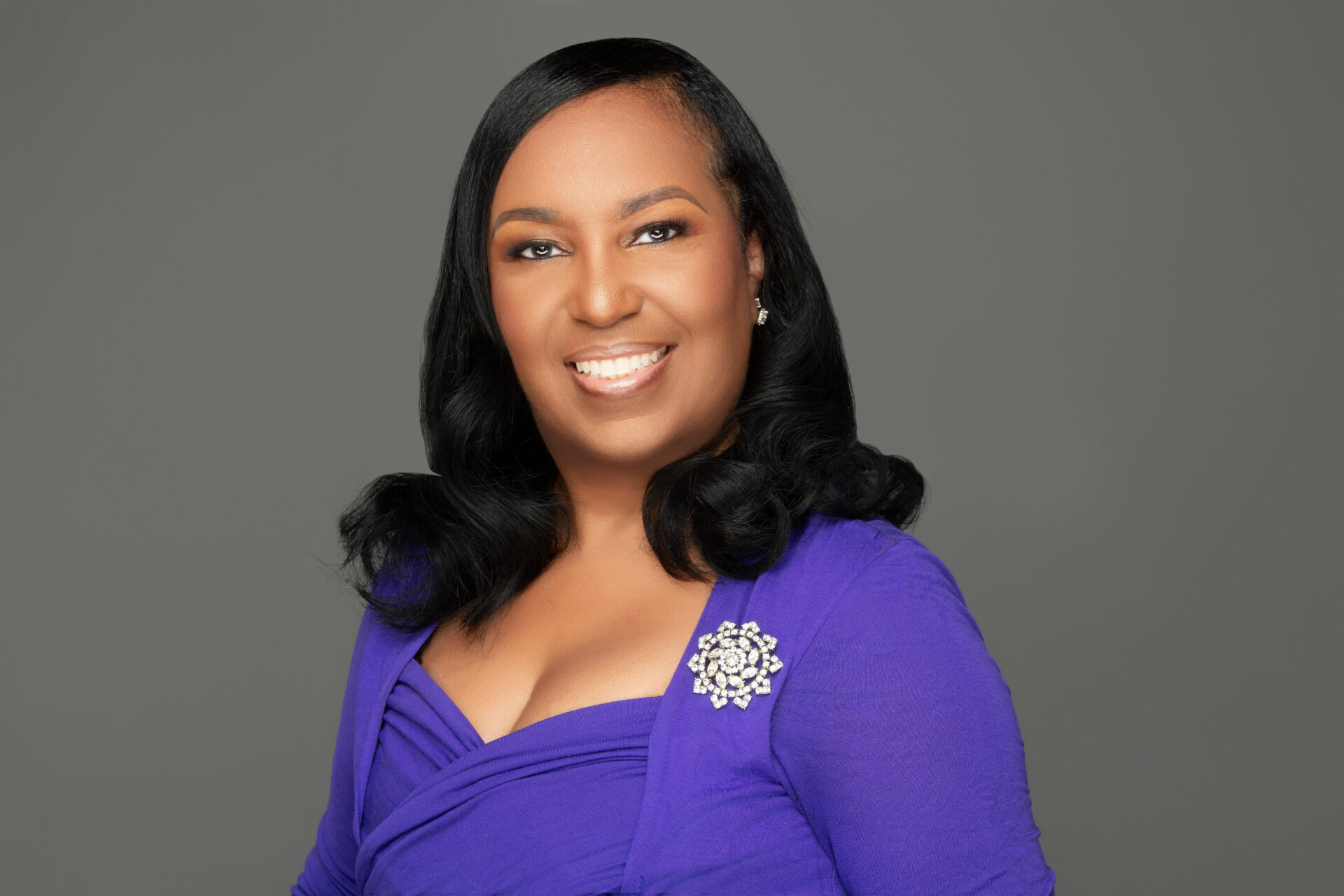
What inspired you to become a biographer? What has your path looked like?
Becoming a biographer was a natural progression for me. My first biography, Empire: The House That John H. Johnson Built (The Life & Legacy of Pioneering Publishing Magnate) (DocM.A.C. Write Publishing, 2018), was based on research I conducted for my dissertation on adult and continuing education, which I completed in 2013. The same year that book came out, I was delighted when Oxford University Press reached out and commissioned me to write essays for American National Biography (ANB), which publishes biographies of individuals of diverse backgrounds whose work has left a lasting impression on U.S. history. ANB had me write about Johnson, whose Johnson Publishing Company (JPC) empire included Ebony and Jet magazines. They asked if I would also write an essay about Johnson’s wife, Eunice W. Johnson, a fashion trailblazer who was the founder and director of the Ebony Fashion Fair, a groundbreaking traveling show, and creator/founder of Fashion Fair Cosmetics. This work opened doors for other commissioned subjects, including Lerone Bennett Jr., Bo Diddley, Luther Vandross, Della Reese, Donna Summer, Ossie Davis, Aaliyah, Tupac Shakur and Christopher “Notorious B.I.G” Wallace. As a result, my dedication and commitment as a biographer were solidified.
What is your current project and how did you become interested in it?
It’s No Wonder: The Life and Times of Motown’s Legendary Songwriter Sylvia Moy. My interest in Moy began during the pandemic in 2021, when I saw a post on Instagram and then on Facebook with an image of her standing behind a piano with Stevie Wonder and three session musicians of Motown’s legendary Funk Brothers. The post included claims about Moy’s being the first woman to write and produce songs at Motown. Also, it mentioned that she supposedly saved Wonder from being dropped by the label. This intrigued me because I had never heard any of this before. You must be wary of social media; everybody wants to be a reporter, so folks will say anything. Having a background as an editor with both Ebony and Jet, which were on the forefront and noted for documenting African American history, I was surprised to go through archives of both and not see any mention of Moy’s pioneering accomplishments at Motown or in the music industry at large. I was concerned as to why her contributions were ignored if she made these accomplishments. What unsettled me more was that the post called her a producer, but there weren’t any Motown songs listing her as such. Valerie Simpson (along with her husband, Nickolas Ashford) was Motown’s first woman to be formally credited as a producer, but Simpson came to the label in 1966, two years after Moy’s arrival. I had more questions than answers, so I began conducting research.
What have been your most satisfying moments as a biographer?
I am a vessel speaking for those now with their ancestors. Both Johnson and Moy were the first biographies of my subjects. I’ve been most fortunate to write about people who inspired and shaped history not just for their own race but in some ways for others, too. Johnson was in magazine publishing; Moy was in music publishing. Both are different, yet there are some parallels. I often say what Berry Gordy was to Motown as the founder of a pioneering Detroit-based record label, John H. Johnson was to JPC with the then Chicago-based publications Ebony and Jet. These men owned the biggest and most profitable African American businesses in the country at one time. Gordy and Johnson also worked closely together with Johnson chronicling Motown artists in both magazines and on its music charts in Jet. My connection and their connection are not coincidental. They were divinely orchestrated.
If you could offer one piece of writing or research advice to a fellow biographer, what would it be?
Leave no stone unturned when researching. Look in the most unlikely places for information, because you never know what you might unearth. Had I not done so, I would not have been able to prove that Sylvia Moy was a producer at Motown, because her name was never put on any of her work in this role. Nothing was documented and it didn’t help that when I interviewed many of her male colleagues from Motown, they were steadfast and unflinching about her not being a producer. As a research scholar, I was fortunate to find a book by a fellow scholar that mentioned Moy’s production work. This led to me reaching out and interviewing an ethnomusicologist, who served as a consultant with the Motown Historical Museum and worked as a co-contributor for a study guide with Motown the Musical. He was gracious enough to allow me to listen to the original recording of Moy’s interview with him where she discussed her groundbreaking role as a female producer in the ’60s. It was in celestial order because all of this came from spotting a footnote tucked away in a chapter he had written about Motown. Just imagine: she was at one point a footnote in history, but through my work as a biographer with It’s No Wonder, Moy’s voice is finally being heard. Things moved from history to herstory.
How do you reach your readers, whether online or in-person?
It’s a grind, but nobody will work harder for you than yourself. I’m on all social media platforms except Tik Tok, because I don’t necessarily enjoy being in front of the camera. I use a public and a private Facebook page, Twitter/X, Bluesky, Threads, Instagram and LinkedIn. It doesn’t matter how many followers I have. I believe in disseminating information wherever I can. It doesn’t matter if you have 100 followers or 100,000; give it your all and don’t shortchange posting information, because engagement is crucial. I firmly believe if the right people see something you posted, it can catch fire. From there, the sky is the limit, but you’ll never know if you don’t try. Also, I reach readers through my own website, www.margenachristian.com In person, I reach readers through networking with family, friends, colleagues, former students, folks I meet, etc. I’ll discuss my work with whoever will listen. But most of all, having the amazing PR team at the Hachette/Da Capo publishing house by my side has been beneficial. You know what they say, “Teamwork makes the dream work.”
Who is your favorite biographer or what is your favorite biography and why?
The biography that stands out most for me is The Immortal Life of Henrietta Lacks by Rebecca Skloot. Skloot humanized and raised awareness about a poor 31-year-old Black woman who succumbed to cervical cancer but whose cells completely changed the trajectory of modern medicine. Skloot uncovered that in 1951 these cells were taken for medical testing without Lacks’s knowledge. In my opinion, Skloot wrote more than a biography. She used her work as advocacy to uncover the injustices and deception that takes place far too often with women and particularly those within marginalized communities in general. Without Lacks’s cells, we wouldn’t have many of the critical treatments we depend on today, but this woman’s own family suffered in silence. People enjoy “hidden figure” stories, but as it relates to certain groups of people, most everything about them is either ignored or overlooked. People stumble upon their humanity and benefit from it. With this book, Skloot spoke truth to power. Just recently Lacks’s family was awarded an undisclosed settlement from the pharmaceutical giant that profited from her cells. What is in the dark will always come to the light no matter how many years or decades that it takes. Truth will prevail as expertly demonstrated in this biography. Let your work speak for itself and it will.
—
Dr. Margena A. Christian is a former editor for Jet (1995-2009) and Ebony magazines (2010-14). A Chicago resident, she is an emeritus senior lecturer and director of internships for undergraduate studies, English and professional writing at the University of Illinois Chicago, where she was a founding faculty member of the R1 institution’s professional writing program.
|
|
|
|
SPOTLIGHT
Member Nicholas Boggs has an article in The Atlantic this month:
Eight of the Most Fascinating Biographies to Read
Each is animated by the author’s love—for their subject, for language, and for pushing the boundaries of what the genre can do.
Literary biography is a cruel genre. The authors of these books—by which I mean not just biographies about literary figures but also those that aspire to writerly excellence—have been described by the writer Janet Malcolm as “professional burglars.” After rifling through a person’s affairs, they must conjure inside their pages a living, breathing human being—and then, inevitably, they’ll have to close the coffin on their resurrected subject. But I like to think the “literary” element can temper the sting of these dastardly deeds, insofar as the author is tasked with perpetrating them in the most humane way possible: with the appropriate amount of reverence, style, and, yes, love. This is, at least, what I tried to do in my own literary biography, Baldwin: A Love Story, about James Baldwin’s life and relationships. READ MORE.
|
|
|
|
|
BIO PODCAST
The BIO Podcast continues with Jenny Skoog’s conversation with biographers Sara Benincasa, Kate Culkin, Kevin McGruder, and Katie Rose Quandt in the “Four Paths, One Impossible Dream” series with episode 251, Part II: The Work; episode 252, Part III: The Business of Biography; episode 253, Part VI: Challenging the Canon; episode 254, Part V: Community and Solitude; and episode 255, Part VI: Still Writing. Episode 256 features an interview with Gayle Feldman about her new biography of Bennett Cerf.
|
|
|
|
PITCH YOUR ARTICLE
Would you like to see your work featured in The Biographer’s Craft? Send your proposal to BIO’s associate editor, Melanie R. Meadors. Features should focus on the art and craft of biography, should not be promotional, and must be written by BIO members. Submit your pitch here.
|
|
|
|
KEEP YOUR INFO CURRENT
Making a move or just changed your email? We ask BIO members to keep their contact information up to date, so we and other members know where to find you. Update your information in the Member Area of the BIO website.
|
|
|
MEMBERSHIP UP FOR RENEWAL?
Please respond promptly to your membership renewal notice. As a nonprofit organization, BIO depends on members’ dues to fund our annual conference, the publication of this newsletter, and the other work we do to support biographers around the world.
|
|
|
|
|
|
BIO BOARD OF DIRECTORS
Steve Paul, President
Heather Clark, Vice President
Marc Leepson, Treasurer
Lauren Arrington, Secretary
Michael Gately, Executive Director
Emily Bernard
Natalie Dykstra
Sara Fitzgerald
Daphne Geanacopoulos
Carla Kaplan
Diane Kiesel
Kate Clifford Larson
Linda Leavell
Heath Lee
Susan Page
Tamara Payne
Barbara Lehman Smith
Kathleen Stone
Elizabeth Taylor
Pamela D. Toler
Eric K. Washington
ADVISORY COUNCIL
Debby Applegate, Chair • Kai Bird • Taylor Branch • A’Lelia Bundles • Robert Caro • Ron Chernow • Tim Duggan • John A. Farrell • Caroline Fraser • Irwin Gellman • Michael Holroyd • Peniel Joseph • Kitty Kelley • Hermione Lee • David Levering Lewis • Andrew Lownie • Megan Marshall • John Matteson • Jon Meacham • Candice Millard • James McGrath Morris • Andrew Morton • Hans Renders • Stacy Schiff • Gayfryd Steinberg •
T. J. Stiles • Rachel Swarns • William Taubman • Claire Tomalin
|
|
|
THE BIOGRAPHER'S CRAFT
Editor
Jared Stearns
Associate Editor
Melanie R. Meadors
Consulting Editor
James McGrath Morris
Copy Editor
James Bradley
|
|
|
|